

Jon Lord co-founded Deep Purple in 1968 and became one of the most distinctive voices in rock keyboard history, a classically trained musician who chose to chase the thunder of amplified sound rather than the quiet of the concert hall.
His Hammond organ, plugged directly into a Marshall amplifier stack, produced a tone unlike anything the rock world had heard before.
He was a composer, arranger, improviser, and collaborator who brought genuine musical depth to a band that was never short of ambition.
This is the complete story of Jon Lord: the man who helped invent hard rock and spent the rest of his life expanding what music could be.
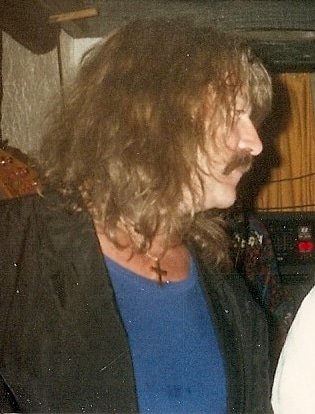
Image credit: Wikimedia Commons
📋 Table of Contents [+]
Early Life and Classical Roots
Jonathan Douglas Lord was born on June 9, 1941, in Leicester, England, into a household where music was already part of daily life.
His father was an amateur saxophonist who encouraged Jon to pursue music from an early age, and by the time he was five years old he had begun formal classical piano lessons with a local teacher named Frederick Allt.
That early classical grounding stayed with him for the rest of his life, shaping his harmonic instincts, his compositional approach, and his ability to operate comfortably in musical worlds far removed from hard rock.
His influences as a young musician ranged widely: from Johann Sebastian Bach and the English Romantic tradition of Edward Elgar at the classical end, to jazz organists Jimmy Smith and Jimmy McGriff, to rock and roll wild man Jerry Lee Lewis.
This breadth of reference was unusual for the era, and it gave Lord a musical perspective that none of his rock contemporaries could quite replicate.
He left school at seventeen, worked briefly as a solicitor’s clerk, and also studied acting for a time before deciding that music was the only path he wanted to follow seriously.
Moving to London in 1960, he threw himself into the city’s thriving live music scene and began building the network of contacts and skills that would take him to the top of British rock by the end of the decade.
💡 Did You Know?
Jon Lord claimed in a 1988 interview that he played piano on The Kinks’ debut single “You Really Got Me” as a session musician, earning £5 for the session. The Kinks and their management always disputed this, but the story has persisted as one of the more intriguing footnotes in his pre-Deep Purple career.
The Artwoods and Early London Bands
Lord’s path through the London club scene brought him into contact with a rotating cast of musicians, some of whom would go on to considerable fame of their own.
One early ensemble included a young Ronnie Wood, years before Wood would join the Faces and later the Rolling Stones.
Lord’s most significant pre-Deep Purple band was the Artwoods, an R&B group led by Art Wood, older brother of Ron.
The Artwoods released a handful of singles and one album between 1964 and 1967, and while they never broke through commercially, they built Lord’s reputation as a keyboard player of genuine quality and versatility.
He also worked with the Flower Pot Men, a studio project behind the 1967 hit “Let’s Go to San Francisco,” appearing on BBC sessions and live dates that extended his professional experience.
These years in the trenches of the London music scene gave Lord exactly what formal conservatory training could never have provided: the ability to play in front of an audience and hold a band together under pressure.
By 1968, he had connected with drummer Ian Paice and guitarist Ritchie Blackmore, and the idea of a new, more ambitious band began to take shape.
Jon Lord Joins Deep Purple
Jon Lord was one of the founding members of Deep Purple, helping to assemble the original lineup in 1968 alongside Ian Paice, Ritchie Blackmore, vocalist Rod Evans, and bassist Nick Simper.
The band’s name came from a favourite song of Blackmore’s grandmother, and from the outset the group had a broader musical ambition than most of their hard rock contemporaries.
Deep Purple’s debut album, Shades of Deep Purple, was released in 1968 and generated a genuine American hit with “Hush,” which reached the top five in the United States.
On that album and on the follow-ups The Book of Taliesyn and the self-titled third album, Jon Lord’s keyboard work was the dominant sonic personality of the band, his organ providing colour and drama across arrangements that ranged from straight-ahead rock to something more adventurous.
He co-wrote material throughout and pushed the band consistently toward more ambitious compositional territory, even when that caused friction within the lineup.
The original Mark I lineup was a commercial success in North America but never quite caught fire in the UK, and by 1969, personnel changes would completely reshape what Deep Purple was capable of becoming.
The Mark I Era: The Concerto Years
During the Mark I era, Jon Lord’s classical ambitions were given their fullest expression yet within a rock context.
Songs like “Anthem” on The Book of Taliesyn and “April” on the self-titled third album showed his determination to treat the rock format as a canvas rather than a cage.
“April” was particularly ambitious, moving through distinct sections that included a Lord and Blackmore duet on keyboards and acoustic guitar, a full orchestral passage, and then a return to the complete rock band.
This structural thinking set Lord apart from virtually every other rock keyboardist of the period and made Deep Purple’s early catalog genuinely unlike anything else being produced at the time.
Blackmore later acknowledged that he tolerated these classical experiments in exchange for Lord’s agreement to let him drive the next album’s harder rock direction.
The compromise between Lord’s classical instincts and Blackmore’s guitar-forward aggression was the creative tension that defined Deep Purple’s best periods.
💡 Did You Know?
The original score for Deep Purple’s recreation of the Concerto for Group and Orchestra with the Los Angeles Philharmonic in 1970 was lost shortly after the performance. The work was eventually re-recorded in a full new studio version in 2012, the year of Lord’s death, ensuring the Concerto received the definitive recording it had always deserved.
Jon Lord and the Concerto for Group and Orchestra
The most audacious project of Jon Lord’s early career with Deep Purple was the Concerto for Group and Orchestra, performed at the Royal Albert Hall in London on September 24, 1969.
Lord composed the three-movement work specifically to be performed by Deep Purple alongside the Royal Philharmonic Orchestra, conducted by Malcolm Arnold.
The concept of a rock band sharing a stage with a full symphony orchestra on equal terms, rather than as novelty or accompaniment, was genuinely radical for 1969.
The performance and the resulting live album attracted mixed reviews: classical critics found it too commercial, while some rock fans found it too formal.
But for Lord, the Concerto represented his deepest conviction about music: that genre boundaries were artificial, that the best ideas could cross between worlds, and that there was no reason a Hammond organ and a string section could not coexist as equals.
Rick Wakeman, who would go on to become one of rock’s great keyboard architects himself, cited the Concerto as an important reference point and spoke of Lord’s talent with genuine admiration.
The Concerto set a template that Jon Lord would return to throughout his career, and the ideas first explored in that 1969 performance would eventually bloom fully in his solo classical work decades later.
The Mark II Era: Hard Rock at Its Peak
The arrival of vocalist Ian Gillan and bassist Roger Glover in 1969 transformed Deep Purple into a fundamentally different kind of band.
The Mark II lineup was harder, heavier, and more focused on live impact, and Jon Lord’s organ playing shifted accordingly: less searching, more aggressive, and locked more tightly into the band’s new rhythmic attack.
Deep Purple in Rock, released in June 1970, announced the Mark II era with force and immediately established the album as one of the defining records of the nascent hard rock genre.
Lord’s organ on tracks like “Child in Time” and “Speed King” created a wall of distorted sound that matched Blackmore’s guitar not just in volume but in musical intelligence.
The band built on In Rock with Fireball in 1971, which reached number one in the UK, and then with the album that would define their legacy for millions of listeners worldwide.
Lord and Ian Paice were the only two members who remained continuous throughout the entire period from Deep Purple’s founding in 1968 to the first breakup in 1976, a distinction that reflected Lord’s central importance to everything the band was and became.
Machine Head and the Immortal Riffs
The sessions that produced Machine Head in late 1971 took place in Montreux, Switzerland, after a fire destroyed the casino where the band had planned to record.
Lord’s performances across Machine Head remain some of the most recognizable organ passages in rock history.
On Smoke on the Water, his organ intertwines with Blackmore’s guitar in the verse and then explodes forward during the improvised solo sections, a masterclass in knowing when to lead and when to support.
“Highway Star” showcases his ability to deliver a Bach-influenced keyboard solo at full speed within a hard rock arrangement, the classical training directly audible beneath the distortion.
“Lazy” gives him room to breathe within a slower, bluesier arrangement, revealing the jazz and blues influences that sat alongside the classical ones in his musical identity.
Machine Head reached the top ten in multiple countries and eventually sold over four million copies in the United States alone, cementing Deep Purple and Jon Lord’s place in the first rank of rock history.
Jon Lord’s Hammond Organ Sound
Jon Lord’s most technically significant contribution to rock music was his method of amplifying the Hammond organ.
Rather than running the instrument through a standard Leslie speaker cabinet as most organists did, Lord routed the Hammond’s signal directly into a Marshall guitar amplifier stack.
This produced a distorted, aggressive tone that could compete on equal terms with Ritchie Blackmore’s overdriven guitar, something no other keyboard player in rock had achieved at that volume and intensity.
The Leslie cabinet produces a warm, rotating speaker effect that works beautifully in jazz and blues settings but tends to get lost in the roar of a hard rock band playing at full power.
The Marshall stack gave Lord’s Hammond the cutting presence and harmonic distortion that allowed it to function as a lead voice rather than a supporting one in Deep Purple’s dense arrangements.
His sound became so distinctive that it was immediately recognizable within two or three notes, and it inspired a generation of hard rock and heavy metal keyboard players who followed in his wake.
Rick Wakeman noted that Lord could make a Hammond organ do things that other players could only dream about, and that his work had held up over time in a way that very few players from the 1970s could claim.
Jon Lord Departs Deep Purple
Jon Lord remained with Deep Purple through the Mark III era that followed the departures of Gillan and Roger Glover in 1973, providing continuity during a period of significant lineup upheaval.
The Mark III lineup, featuring Ritchie Blackmore alongside new members David Coverdale and Glenn Hughes, produced the Burn and Stormbringer albums in 1974.
Lord stayed on through Blackmore’s departure in 1975 and into the short-lived Mark IV era with Tommy Bolin, playing on Come Taste the Band before Deep Purple finally dissolved in 1976.
That dissolution marked the end of his first long stint with the band, though it was far from the end of his relationship with its music or its members.
His departure from a band he had co-founded and steered through its greatest years was a significant moment, but Lord had never been someone who defined himself solely by one project, and he moved quickly into new work.
Whitesnake and Paice Ashton Lord
After Deep Purple’s 1976 dissolution, Jon Lord joined Paice Ashton Lord, a short-lived supergroup also featuring Ian Paice and vocalist Tony Ashton, releasing one album, Malice in Wonderland, in 1977.
In 1978, he joined David Coverdale’s new band Whitesnake, playing on the early albums that established that band’s bluesy, hard rock identity.
His time with Whitesnake produced the albums Trouble, Lovehunter, Ready an’ Willing, Come An’ Get It, and Saints and Sinners, across a period of four years of recording and touring.
Working with Coverdale gave Lord a different creative context from Deep Purple, one where the blues and soul elements of his playing were front and center rather than balanced against classical structure.
He left Whitesnake in 1982 when the band moved in a more commercial direction, a decision consistent with his lifelong preference for musical substance over mainstream appeal.
The years between Deep Purple’s breakup and the 1984 reunion also saw Lord continue his solo compositional work, pursuing the classical ambitions that a full touring schedule with Deep Purple had always kept slightly at arm’s length.
💡 Did You Know?
Jon Lord was awarded an honorary Doctor of Music degree by the University of Leicester on July 15, 2011, just days before the announcement of his pancreatic cancer diagnosis. The honour recognized a lifetime of musical achievement and his contribution to British culture, coming at the end of a career that had spanned classical, rock, jazz, and blues with equal distinction.
Jon Lord Returns to Deep Purple (1984)
Jon Lord rejoined Deep Purple in 1984 as part of the full Mark II reunion that also brought back Ian Gillan and Roger Glover alongside Ritchie Blackmore and Ian Paice.
The reunion album, Perfect Strangers, was released in October 1984 and proved that the chemistry between these five musicians had not diminished during the decade they had spent apart.
Lord’s keyboard work on Perfect Strangers was mature and assured, bringing the full weight of his classical and compositional experience to a band that was rediscovering its identity.
The subsequent touring cycle was one of the most successful in the band’s history, and the reunion confirmed that Deep Purple could still fill arenas and deliver the goods on a global scale.
Lord remained with the reunited Deep Purple through eighteen more years of continuous recording and touring, contributing to albums including The House of Blue Light, Slaves and Masters, The Battle Rages On, Purpendicular, Abandon, and Bananas.
Through personnel changes that included the departure of Blackmore, the arrival of Joe Lynn Turner, and eventually the permanent replacement of Blackmore by Steve Morse, Lord was the constant, the historical memory and the musical anchor of everything Deep Purple had been and continued to be.
For a complete account of every lineup that included Jon Lord, the Members of Deep Purple hub covers every era and transition in full detail.
Jon Lord’s Solo Career and Classical Legacy
Throughout his time with Deep Purple, Jon Lord maintained an active solo career that grew steadily more ambitious as the years passed.
His early solo work included Gemini Suite, a 1971 orchestral piece that grew from a BBC commission and was performed live at the Royal Festival Hall.
The Windows album followed in 1974, and Sarabande in 1976, each pushing his compositional language further from rock and deeper into classical structures without abandoning the expressiveness he had developed as a rock musician.
His 1999 album Pictured Within was a solo piano record of unusual delicacy and restraint, recorded in Cologne and released on Virgin Classics, a classical label, signalling that the transition from rock sideman to classical composer was now genuinely complete.
Beyond the Notes followed in 2004 and included a track called “De Profundis” that Lord described as his farewell to Deep Purple, a reflection on what leaving a band he had co-founded had meant to him emotionally.
His ability to move between the disciplines of classical composition and rock improvisation without losing authenticity in either was the defining quality of a career that refused every easy category.
The Durham Concerto
Jon Lord’s most ambitious post-Deep Purple composition was the Durham Concerto, a six-movement orchestral work premiered in 2007 at Durham Cathedral with the Royal Liverpool Philharmonic Orchestra.
The piece drew on a wide range of influences, including Ralph Vaughan Williams, John Tavener, and Malcolm Arnold, while remaining recognizably personal in its melodic character.
Unlike the Concerto for Group and Orchestra, which had placed a rock band in dialogue with an orchestra, the Durham Concerto was a purely classical work in form and intent.
It demonstrated that Lord’s journey away from rock was genuine rather than performative, and that the compositional instincts he had always carried within Deep Purple were capable of producing work that stood on its own in the classical world.
The Durham Concerto received strong reviews and was later recorded with the BBC Concert Orchestra and released in 2008, becoming one of the most significant classical recordings by any artist associated with rock music.
It also served as a statement of what Jon Lord had always believed: that the distinction between rock music and classical music was a commercial convenience rather than a musical truth.
Jon Lord’s Legacy and Passing
In August 2011, Jon Lord announced publicly that he had been diagnosed with pancreatic cancer.
He continued working as long as his health permitted, and in July 2011 he had appeared at a tribute concert at the Royal Albert Hall honouring his career.
Jon Lord died of a pulmonary embolism at the London Clinic on July 16, 2012, at the age of seventy-one.
The tributes that followed from across the music world reflected the scale of his influence: Rick Wakeman called his contribution to music immeasurable, and ABBA’s Frida Lyngstad described him as graceful, intelligent, and deeply empathetic.
Jon Lord was posthumously inducted into the Rock and Roll Hall of Fame on April 8, 2016, as a member of Deep Purple, formal recognition of a contribution that any honest assessment of rock history cannot overlook.
Roger Glover, speaking in the years after Lord’s death, said simply: “He lives in me. He was a wonderful man, and I miss him. Every time I listen to something he played on, I think how great it is. He taught me a lot.”
That quality, the capacity to teach something lasting simply by playing with full commitment and no ego, is perhaps the truest measure of Jon Lord’s place in rock history.
People Also Ask
When did Jon Lord die?
Jon Lord died on July 16, 2012, at the London Clinic in London, England. He was seventy-one years old. The cause of death was a pulmonary embolism following a battle with pancreatic cancer that he had announced publicly in August 2011.
What instrument did Jon Lord play?
Jon Lord was primarily a Hammond organ player, most famously the Hammond B3, which he ran through a Marshall guitar amplifier rather than a traditional Leslie speaker cabinet to create his signature distorted, aggressive rock tone. He was also a classically trained pianist and played piano, electric piano, and harpsichord across his career in both rock and classical settings.
What was Jon Lord known for?
Jon Lord was known as co-founder and keyboard player of Deep Purple, and for pioneering the use of a distorted Hammond organ in hard rock by routing it through a Marshall amplifier. He was also recognized for his Concerto for Group and Orchestra performed at the Royal Albert Hall in 1969, his later classical compositions including the Durham Concerto, and his work with Whitesnake and Paice Ashton Lord.
Who replaced Jon Lord in Deep Purple?
Don Airey replaced Jon Lord in Deep Purple after Lord retired from the band in February 2002 following their UK tour. Airey initially joined as Lord’s temporary replacement while Lord recovered from a knee injury, then became the permanent replacement after Lord chose to retire in order to focus on his classical solo work. Airey remains Deep Purple’s keyboard player to this day.
What was Jon Lord’s connection to classical music?
Jon Lord studied classical piano from the age of five and his primary influences included Bach, Elgar, and the broader European classical tradition. Within Deep Purple he composed the Concerto for Group and Orchestra in 1969, one of rock’s first serious attempts to integrate an orchestra with a rock band. After retiring from Deep Purple in 2002, he devoted himself fully to classical composition, releasing albums on classical labels and composing the six-movement Durham Concerto for the Royal Liverpool Philharmonic Orchestra.
Is Jon Lord in the Rock and Roll Hall of Fame?
Yes, Jon Lord was posthumously inducted into the Rock and Roll Hall of Fame on April 8, 2016, as a member of Deep Purple. The induction came four years after his death from pancreatic cancer and recognized both his contributions as a rock musician and co-founder of one of the genre’s most important bands.
Watch: Jon Lord Interview
In this interview, Jon Lord discusses his work beyond Deep Purple, offering insight into the classical compositions and personal projects that defined his later career.
Essential Deep Purple Albums Featuring Jon Lord
Affiliate Disclosure: I am an Amazon affiliate and if you purchase through any amazon links on this site i may earn a small commission at no extra charge to you. This helps support classicrockartists.com and allows me to keep providing deep-dive content on the legends of rock. Thank you for your support!
As an Amazon Associate, I earn from qualifying purchases.

Deep Purple in Rock
1970 — The Mark II Breakthrough
Essential listening
Jon Lord’s organ is the dominant personality across this ferocious debut. Child in Time and Speed King show exactly what his Marshall-driven Hammond could do.

Machine Head
1972 — The Peak of the Mark II Era
Essential listening
Smoke on the Water, Highway Star, Lazy. Jon Lord’s Bach-influenced Highway Star solo alone justifies its place in any rock collection.

Shades of Deep Purple
1968 — Where It All Started
Essential listening
The debut album that launched a Top 5 US hit with “Hush.” Jon Lord’s organ is already the defining voice of the band on this opening statement.

The Very Best of Deep Purple
Best-Of Compilation
Essential listening
The ideal single-disc introduction to Jon Lord’s work across the full span of Deep Purple. Every track a reminder of why he mattered so much.
You Might Also Like
Jon Lord was not simply one of Deep Purple’s founding members; he was the musical conscience of the band, the voice that insisted there was more to be done than just playing loud and fast.
From the Royal Albert Hall stage in 1969 to the Durham Cathedral premiere in 2007, he spent his entire career proving that the distance between a Hammond organ and a symphony orchestra was smaller than anyone had assumed.
Learn more about his life, instruments, and influences at his Wikipedia biography, and explore every member and era of the band he helped build at the full Members of Deep Purple hub.
Jon Lord gave rock music something it did not know it needed: a keyboardist who treated every performance as a composition and every composition as a performance, and whose work remains as powerful today as it was when he first plugged that Hammond into a Marshall and changed everything.