
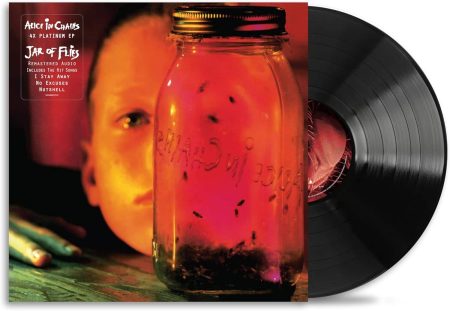
Alice in Chains I Stay Away arrived on the Jar of Flies EP in January 1994 and immediately revealed a side of the band that nobody had seen coming.
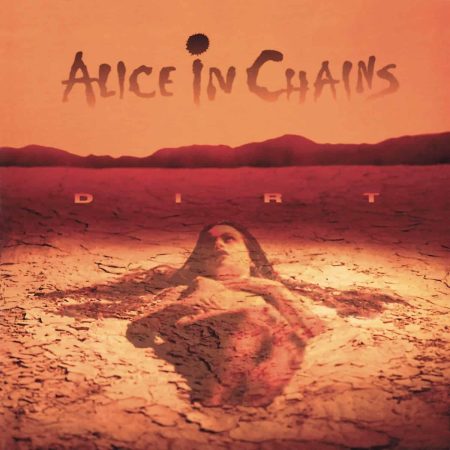
This was a Seattle group that had just released Dirt, one of the heaviest records of the decade, and now they were building songs around cello.
Affiliate Disclosure: As an Amazon Associate I earn from qualifying purchases. This helps support the site at no extra cost to you.
Quick Navigation
- Alice in Chains I Stay Away: A String-Driven Departure
- Recording Jar of Flies: One Week, One Classic
- Jerry Cantrell Writes for the Quiet Moments
- Alice in Chains I Stay Away and Themes of Loss
- Paul Buckmaster Brings Strings to Grunge
- Alice in Chains I Stay Away Tops the Charts
- A Music Video Built Around Grief
- Layne Staley Finds a New Voice
- Alice in Chains I Stay Away at MTV Unplugged 1996
- How the Song Shaped 1990s Rock
Alice in Chains I Stay Away: A String-Driven Departure
Alice in Chains I Stay Away arrived at a moment when grunge was still largely defined by Marshall stacks and distortion pedals.
The song’s cello lines and layered harmonies hit listeners like a cold January morning: quiet, aching, and impossible to ignore.
Guitarist Jerry Cantrell chose restraint over volume, and the result changed what people expected from a Seattle rock band in the middle of the decade.
Nothing in the band’s catalog up to that point fully prepared you for it, yet it felt completely natural once you heard it.
The full story of how Alice in Chains reinvented themselves across every era is told in the Alice in Chains complete member story.
Recording Jar of Flies: One Week, One Classic
The Jar of Flies EP was recorded in a single week at London Bridge Studio in Seattle during January 1994.
Producer Toby Wright and the band captured that session energy without overthinking the material, and the intimacy stayed intact on tape.
The EP debuted at number one on the Billboard 200, making it the first EP in the history of the chart to reach that position.
That chart achievement signaled clearly that rock audiences were hungry for something softer, and more brutally honest, than the mainstream was delivering in early 1994.
The speed of the recording gave every song on the EP a live, unguarded quality that studio polish would have destroyed.
Jerry Cantrell Writes for the Quiet Moments
Cantrell built the song around an acoustic guitar and a descending chord progression that felt closer to Down in a Hole than to the crushing brutality of Angry Chair.
His writing here showed a willingness to sit inside a feeling rather than punch through it, which was a real departure for a band known for aggression.
Cantrell has credited the Jar of Flies period as one of the most creatively freeing stretches of his career, partly because the band had no plan beyond finishing songs that felt right.
He stripped away the elements that made Alice in Chains intimidating and found something more fragile, and more lasting, underneath.
The restraint in his guitar work on this track proved that his best writing did not require volume to make an impact.
Alice in Chains I Stay Away and Themes of Loss
Alice in Chains I Stay Away is widely read as a meditation on letting go of a damaging person or relationship before it pulls you under.
The lyrics sit in that ambiguous space between self-preservation and regret, a voice pulling away but still looking over its shoulder.
Layne Staley delivers the words with a restraint that makes them land harder than any scream could in 1994.
The emotional weight of the song connects directly to the themes Cantrell explored in Would?, and finds a quieter companion in No Excuses, the EP’s lead single.
Both songs share a feeling of reluctant tenderness, as though the band had decided that honesty mattered more than image that winter.
Paul Buckmaster Brings Strings to Grunge
Arranger Paul Buckmaster, known worldwide for his string arrangements on Elton John records including “Your Song,” gave this track its orchestral weight.
His cello and string arrangements wrapped around Cantrell’s guitar in a way that no grunge producer had attempted before on a rock single.
Buckmaster’s presence on the track sent a message: this music was serious enough to deserve the same treatment as a pop ballad from the previous decade.
The strings did not soften the song so much as deepen it, adding layers of grief and distance that the guitar alone could not carry.
That combination of distorted rock sensibility and classical arrangement gave the song a texture that still sounds completely unique thirty years later.
Alice in Chains I Stay Away Tops the Charts
Alice in Chains I Stay Away reached number one on the Mainstream Rock chart and held that position for two weeks in early 1994.
That chart run confirmed that the band’s acoustic instincts were not a side experiment but a genuine commercial force in their own right.
Radio programmers who had built playlists around Man in the Box now had to reckon with a band playing something closer to chamber music at the top of the rock chart.
The song’s success followed No Excuses to number one, meaning Alice in Chains occupied the peak of rock radio for much of the winter and spring of 1994.
No other band in that era managed to go from the bone-crushing Dirt to back-to-back acoustic number ones without losing the audience that had made them.
A Music Video Built Around Grief
Director Mark Pellington shot the music video using a surreal, puppet-heavy visual language that matched the song’s themes of helplessness and distance.
The imagery of marionettes moving through darkened rooms mirrored the song’s central feeling: being controlled by something you cannot name or fight directly.
The video received heavy MTV rotation throughout early 1994 and introduced alice in chains i stay away to an audience well beyond the reach of rock radio.
Pellington’s visual approach sat somewhere between a dream and a nightmare, which was exactly the right register for the material.
It remains one of the most visually memorable videos of the mid-1990s alternative era, still striking when watched today.
Layne Staley Finds a New Voice
Staley’s vocal on this track is one of the most controlled performances of his entire career, measured against everything he recorded in the early and mid-1990s.
Where Dirt demanded raw power and volume, this song asked him to hold back, and the restraint reveals a completely different kind of tension.
His harmonies with Cantrell, stacked and precisely placed, gave the track a choir-like quality that surprised listeners who had been expecting the aggression of the previous record.
The performance showed that Staley’s voice had a gentler register that was just as capable of communicating pain as anything he had screamed on Dirt.
This was the version of Alice in Chains that younger artists across the alternative world would spend years trying to replicate.
Alice in Chains I Stay Away at MTV Unplugged 1996
Alice in Chains I Stay Away took on a different and heavier meaning when the band performed it at the MTV Unplugged taping in Seattle in April 1996.
Staley was visibly struggling by that point, but his voice held, and the performance became one of the most discussed moments of that entire evening.
Watching him sing a song about pulling away from something that is destroying you, in those circumstances, turned the performance into something close to unbearable.
The MTV Unplugged album preserved that night and made alice in chains i stay away available to a new generation that had not been there in 1994.
The recording stands as evidence of what the band could still do at their best, even as everything around them was falling apart.
How the Song Shaped 1990s Rock
Few songs from the grunge era crossed genre lines as quietly and completely as this one did in the years that followed its release.
It influenced post-grunge acts, alternative country artists, and indie bands who heard in its string arrangements a new way to write about pain without losing rock credibility.
The song proved that heavy music did not require volume to be crushing, and that lesson spread through rock and alternative music for the rest of the decade.
It also marked a turning point in how rock bands approached orchestration, opening a door that groups like Radiohead and others would later walk through.
Thirty years on, alice in chains i stay away still sounds like the most honest thing to come out of Seattle in the winter of 1994.