

You Ain’t Seen Nothin’ Yet by Bachman-Turner Overdrive is one of the most unexpected number-one singles in rock history, a recording that was created as a private joke, never intended for release, and then became the biggest commercial success of the band’s career.
Affiliate Disclosure: I am an Amazon affiliate and if you purchase through any amazon links on this site i may earn a small commission at no extra charge to you.
Written and produced by Randy Bachman, the track was recorded as a demo intended only for Gary Bachman, Randy’s brother who had a stutter, with the stuttering vocal delivery created as an affectionate impression rather than a serious recording.
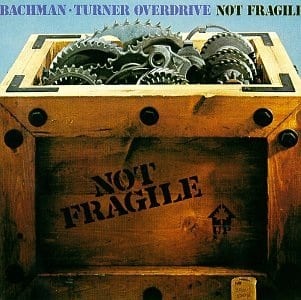
The band’s manager insisted the track be included on the 1974 album Not Fragile over Randy’s objections, and when it was released as a single it reached #1 on the US Billboard Hot 100 and #2 on the UK Singles Chart, making You Ain’t Seen Nothin’ Yet the most commercially successful recording in BTO’s catalogue.
The story behind the track is one of the most frequently told in classic rock, illustrating the unpredictable relationship between artistic intention and commercial success, and the recording retains its propulsive hard rock energy and the charm of its accidental origins more than fifty years after it was made.
| Song Title | You Ain’t Seen Nothin’ Yet |
| Artist | Bachman-Turner Overdrive |
| Album | Not Fragile (1974) |
| Released | September 1974 |
| Written By | Randy Bachman |
| Producer | Randy Bachman |
| Label | Mercury Records |
| Chart Peak | #1 US Billboard Hot 100, #2 UK Singles Chart |
What Is You Ain’t Seen Nothin’ Yet About?
At its surface level, the lyric is a celebration of romantic excitement, with the narrator describing a woman who has shown him new possibilities in love and promising that what they have shared is only the beginning of something extraordinary.
The repeated declaration of the title functions as both a boast and a promise: the narrator is confident that what he has to offer exceeds anything the woman has previously experienced, and the combination of swagger and genuine enthusiasm gives the lyric its appealing energy.
The stuttering delivery of the title phrase transforms the lyric’s emotional content, softening what could have been straightforward machismo into something more endearing and even self-deprecating, an effect that Randy Bachman achieved entirely by accident in the process of making a private joke.
The song operates on the level of mood and energy rather than lyric complexity, and its power comes from the same combination of confidence and enthusiasm that makes the best rock and roll work regardless of the sophistication of the words.
The Vibe: Genre, Mood, and Search Intent
The recording opens with Fred Turner‘s bass and Randy Bachman’s guitar riff before the vocal enters with the stuttering delivery that defines the track’s character and distinguishes it from every other BTO recording.
Robbie Bachman‘s drumming provides the hard rock foundation with the same no-nonsense power that characterises BTO’s approach throughout the Not Fragile album.
- Genre: Hard Rock, Classic Rock, Heavy Rock
- Mood: Confident, Energetic, Celebratory
- Tempo: Fast rock (~132 BPM)
- Best For: Classic rock playlists, 1970s rock collections, driving music
- Similar To: Bad Company “Can’t Get Enough”, Sweet “Ballroom Blitz”
- Fans Also Search: BTO Not Fragile album, Randy Bachman guitar, Bachman-Turner Overdrive hits
Behind the Lyrics: You Ain’t Seen Nothin’ Yet Story
Randy Bachman has described the recording session You Ain’t Seen Nothin’ Yet in detail: he was working on material for Not Fragile when he recorded the track as a quick demo, deliberately using a stuttering vocal as a private joke about and tribute to his brother Gary’s speech impediment.
The intention was that Gary would hear the track, laugh, and no one else would ever be aware of it, which makes the subsequent chart trajectory of the recording one of the more improbable stories in rock history.
According to the Wikipedia entry on the recording, BTO’s manager Charles Fach heard the demo and insisted it be included on the album over Bachman’s protests, convinced that the stutter effect would make it stand out on radio precisely because it was different from every other rock vocal being played at the time.
Fach was proved right on a scale that nobody anticipated: You Ain’t Seen Nothin’ Yet went to number one in the United States and became the defining recording of BTO’s career, illustrating how commercial instinct and artistic accident can combine to produce results that neither could have achieved alone.
For listeners exploring the harder end of mid-1970s rock, this recording belongs alongside AC/DC‘s early work and Aerosmith‘s peak period as one of the recordings that defined the genre’s commercial possibilities in the era before heavy metal formalised as a separate category.
Technical Corner: Gear and Production
Randy Bachman’s guitar work throughout You Ain’t Seen Nothin’ Yet reflects his background in the Guess Who and his long experience with blues-rooted rock: the riff is simple, direct, and immediately memorable, built from the same stock of blues-derived rock vocabulary that powers the best recordings of the era.
The stuttering vocal effect was not created through any electronic processing: it is simply Bachman deliberately repeating syllables in the way he had observed his brother speaking, and the fact that it was a human performance rather than a technical trick is audible in the natural variation of the delivery.
Fred Turner’s bass work is low in the mix by the standards of later hard rock production, but its presence is felt throughout as a rhythmic anchor that keeps the track moving with the consistent forward propulsion that BTO’s harder material requires.
The production approach on Not Fragile was deliberately raw and live-sounding, avoiding the studio elaboration that some of BTO’s contemporaries were pursuing, and this directness suits the material perfectly.
The recording was done quickly and in a single session, which gives it the spontaneous energy of a performance rather than a carefully constructed studio piece, and that spontaneity is part of what makes it so immediately effective on radio.
Legacy and Charts: Impact and Endurance
You Ain’t Seen Nothin’ Yet reached #1 on the US Billboard Hot 100 in November 1974 and stayed there for one week, making it one of the most commercially successful recordings in the history of Canadian rock and confirming BTO as one of the era’s most radio-friendly hard rock acts.
The track’s story has become part of rock mythology: the idea that the biggest hit of a major band’s career was a private joke they never intended to release is both charming and instructive about the difficulty of predicting what will connect with a mass audience.
The recording has appeared consistently on classic rock radio across fifty years, and its combination of the stuttering vocal hook, the hard rock guitar riff, and the track’s infectious energy has made it one of the most recognisable recordings of the mid-1970s.
The stutter effect itself became influential, with subsequent artists noting how the deliberate speech impediment transformed the emotional quality of the vocal and made the track instantly distinctive in a way that a conventional delivery never could have achieved.
You Ain’t Seen Nothin’ Yet stands as one of the great accidental classics in rock history, a recording that succeeded for reasons its creator had not intended and whose commercial life has long outlasted the expectations of everyone involved in its creation.
Listener’s Note: A Personal Take
The opening guitar riff is one of those immediately recognisable figures in hard rock: unpretentious, direct, and entirely fit for purpose, it establishes the track’s character in the first two bars and leaves no ambiguity about what kind of recording you are about to hear.
The stuttering vocal is the element that elevates the track from a competent hard rock recording into something genuinely memorable: it creates a personality for the narrator that a conventional delivery could not have established, making him simultaneously more confident and more endearing.
Robbie Bachman’s drumming throughout You Ain’t Seen Nothin’ Yet is a model of hard rock rhythm work: powerful enough to drive the arrangement forward without becoming the dominant sound, and precise enough to give the guitar and vocal the rhythmic foundation they need.
The song has an honesty about its own nature that is part of its appeal: it does not pretend to be anything other than a hard rock single built for radio play and physical response, and that clarity of purpose is itself a kind of artistic integrity.
It is a recording that rewards the knowledge of its origin story: knowing that the most famous element of You Ain’t Seen Nothin’ Yet was an accident, a private joke that became a number-one hit, adds a layer of pleasure to listening that most recordings cannot offer.
Watch: The Official Music Video
Watch Bachman-Turner Overdrive performing You Ain’t Seen Nothin’ Yet in this official video:
Collector’s Corner: Own a Piece of Rock History
Bachman-Turner Overdrive: Not Fragile (1974)
Own the platinum album that contains one of the most unexpected number-one hits in rock history.
Original Mercury Records pressings, remastered editions, and vinyl available.
Frequently Asked Questions
Why does the vocal stutter?
Randy Bachman created the stuttering vocal as a private joke for his brother Gary, who had a stutter. The track was intended as a personal demo, never meant for release. BTO’s manager Charles Fach heard it and insisted on including it on the Not Fragile album, recognising that the distinctive delivery would stand out on radio.
Who wrote and produced You Ain’t Seen Nothin’ Yet?
You Ain’t Seen Nothin’ Yet was written and produced by Randy Bachman. He recorded the original version quickly as a personal demo with no intention of releasing it, making the subsequent commercial success all the more remarkable.
How did You Ain’t Seen Nothin’ Yet chart?
The single reached #1 on the US Billboard Hot 100 in November 1974 and #2 on the UK Singles Chart, making it the most commercially successful recording in BTO’s catalogue. The album Not Fragile was also certified platinum in the United States.
Who are the members of BTO on You Ain’t Seen Nothin’ Yet?
The recording features Randy Bachman on guitar and lead vocals, Fred Turner on bass and backing vocals, Robbie Bachman on drums, and Tim Bachman on rhythm guitar. Randy Bachman produced the recording himself at a session he expected to be a private demo.
Was Randy Bachman from another famous band?
Yes. Randy Bachman was the lead guitarist and primary songwriter for The Guess Who, one of Canada’s most successful rock bands of the late 1960s and early 1970s, responsible for hits including “American Woman” and “These Eyes.” He left The Guess Who in 1970 and formed Bachman-Turner Overdrive in 1973.
What album is You Ain’t Seen Nothin’ Yet from?
You Ain’t Seen Nothin’ Yet is from Not Fragile, BTO’s third studio album, released on Mercury Records in September 1974. The album reached #1 on the US Billboard 200 and was certified platinum, driven largely by the commercial success of the single.
What is You Ain’t Seen Nothin’ Yet about?
At its surface level, the lyric is about romantic excitement and the narrator’s confidence that what he has to offer a woman exceeds anything she has previously experienced. The charm of the recording lies less in the lyric itself than in the energy of the delivery and the memorable quality of the stuttering vocal hook.
How did the stutter effect become famous?
The stutter in You Ain’t Seen Nothin’ Yet became famous because it was so immediately distinctive on radio, where it stood out from every other hard rock vocal of the period. The fact that it was created as a private family joke rather than a calculated commercial device adds to its charm, and the story of its accidental origins has become one of the most frequently told anecdotes in classic rock history.
You May Also Like
Kansas: Carry On Wayward Son (1976)
A hard rock classic from the same era, sharing the same driving guitar riff approach and the same ability to combine rock energy with an immediately memorable hook.
Sweet: Ballroom Blitz (1973)
A British glam-hard rock classic from the same period, sharing the same unrestrained energy and the same commitment to a hook that demands a physical response from the listener.
Bad Company: Feel Like Makin’ Love (1975)
A mid-1970s hard rock hit from the same commercial era, sharing the same direct lyric approach and the same ability to make a confident, energetic rock recording that works immediately on radio.
More than fifty years after its accidental creation, You Ain’t Seen Nothin’ Yet retains every degree of the hard rock energy, infectious hook, and improbable charm that made it one of the most unexpected number-one hits of the 1970s and one of the most frequently told stories in classic rock history.