

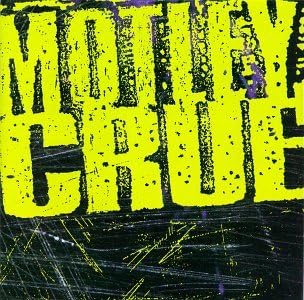
The Motley Crue album released on March 15, 1994, is the most overlooked record in the band’s catalog, built on a $25 million secret that nearly cost them everything.
Affiliate Disclosure: I am an Amazon affiliate and if you purchase through any amazon links on this site i may earn a small commission at no extra charge to you.
Quick Navigation
- What Is the Motley Crue Album of 1994?
- Why Vince Neil Was Out Before Recording Began
- The $25 Million Secret: Hiding Corabi From Elektra
- Motley Crue Album Recording: A Year of Jamming
- John Corabi as Rhythm Guitarist Changed Everything
- Clean and Sober: The Studio Sobriety Pact
- Hooligan’s Holiday: The Motley Crue Album’s Lead Single
- Misunderstood: Six Minutes of Raw Emotion
- Full Tracklist for the Motley Crue 1994 Album
- How the Motley Crue Album Performed on the Charts
- The Quaternary EP: Limited to 20,000 Copies
- Why the Motley Crue Album Vanished From Spotify in 2025
- Tommy Lee Calls It One of His Favorites
- Where the Motley Crue Album Stands Today
- You Might Also Like
What Is the Motley Crue Album of 1994?
The Motley Crue album is the band’s sixth studio record, released March 15, 1994, on Elektra Records.
Produced by Bob Rock, it was recorded from 1992 to 1993 at A&M Studios in Hollywood and Little Mountain Sound in Vancouver, British Columbia.
The total runtime is 60 minutes and 23 seconds, placing it among the longest records in the band’s catalog.
The album was originally developed under the working title Til Death Do Us Part, a phrase that captures the tension running through its twelve tracks.
It was the first release under a new $25 million contract the band had signed with Elektra Records, a deal that arrived with enormous commercial expectations attached.
Genre-wise, this Motley Crue album sits at the intersection of heavy metal, alternative metal, and hard rock, a sound that caught many fans off guard after the polished glam of the band’s earlier work.
The record was the band’s attempt to grow past their image, and the result is something neither fully like what came before nor quite like anything else being made in 1994.
Why Vince Neil Was Out Before Recording Began
Two years before the Motley Crue album arrived in stores, Vince Neil was out of the band.
Whether he was fired or quit remains contested, with Neil and the other members offering conflicting accounts that have shifted across interviews over thirty years.
Neil had been the band’s singer since 1981, lending his voice to every record from Too Fast for Love through Dr. Feelgood.
During his absence from Motley Crue, he released his debut solo album, Exposed, in 1992, pursuing a solo path while his former bandmates began building something entirely different.
The circumstances of his departure were messy, the reasons were never cleanly settled, and the fallout shaped every creative and commercial challenge the band would face over the next two years.
The $25 Million Secret: Hiding Corabi From Elektra
Nikki Sixx reached out to John Corabi after Corabi built his reputation as the lead vocalist of the Los Angeles hard rock band The Scream.
After Corabi auditioned and the band decided he was their man, they made a deliberate choice to keep his hiring secret from Elektra Records.
Elektra had signed Motley Crue on the commercial strength of Vince Neil’s name, and the band understood that revealing Neil was gone could give the label grounds to cancel the $25 million deal.
The band held the secret long enough to secure the contract, then introduced Corabi publicly and absorbed the backlash from fans, press, and the label itself.
This is one of the defining backstories of this Motley Crue album, and it is almost entirely absent from the content currently ranking on the first page of search results.
Motley Crue Album Recording: A Year of Jamming
The process of making the Motley Crue album broke nearly every creative habit the band had built over a decade together.
Corabi described it as four men sitting in a room for almost a year with every piece of stage gear they owned, generating ideas through open-ended improvisation before any formal song structures existed.
It was the first time Sixx had ever shared songwriting credit with another lyricist, and the first time Mick Mars had played alongside a second guitarist in a Motley Crue recording session.
The band had never previously written through extended jamming, making the approach genuinely experimental by their own standards.
After the group sessions, Sixx and Corabi would move off separately to develop lyrics, producing some of the album’s most direct and personal writing.
The record sounds built from the ground up by four people fully committed to a new way of working, which is exactly what it was.
John Corabi as Rhythm Guitarist Changed Everything
Most writing about this era treats John Corabi purely as a vocal replacement, but his role as rhythm guitarist was equally significant to the sound of the Motley Crue album.
Corabi’s guitar skills pushed Mick Mars to play harder and reach further than he had in years, and the creative interplay between two strong guitarists gave the album its heavy, layered foundation.
Mars had never before shared a Motley Crue recording session with a second guitarist, and that dynamic is audible throughout the record’s most aggressive passages.
Critics who have given the album serious attention consistently identify Mars’s playing here as among the finest of his career.
The record’s overall sound sits between the precision of the Metallica Black Album and the raw aggression of Pantera’s Vulgar Display of Power, a parallel that lands harder when you recall Bob Rock produced both Metallica’s 1991 record and this Motley Crue album.
This musical lineage is one of the most underreported aspects of the 1994 record.
Clean and Sober: The Studio Sobriety Pact
During recording of the Motley Crue album, the band adopted a sobriety regimen that extended well beyond setting down the bottle.
No drugs, no alcohol, no cigarettes, no red meat, and no caffeine were the rules in place for the full duration of the sessions.
This stands as a direct contrast to the chaotic, substance-fueled environment that surrounded earlier records, where offstage behavior was often as much a story as the music itself.
The discipline shows in the performances: Tommy Lee‘s drumming throughout all twelve tracks is locked in and physically demanding, and listeners who revisit the record specifically call it out.
The group that made this Motley Crue album was, by their own accounts, a fundamentally different set of people than the ones who had headlined arenas on the back of their previous records.
Hooligan’s Holiday: The Motley Crue Album’s Lead Single
Hooligan’s Holiday was released in February 1994 as the lead single from the Motley Crue album and remains the most recognizable track from the Corabi era.
The song peaked at number 10 on the US Mainstream Rock chart and reached number 36 on the UK Singles chart, a solid result for a band navigating a major public lineup change.
Corabi’s raw delivery made clear immediately that this was not a band attempting to replicate Vince Neil’s approach.
The official music video gave fans their first extended look at the new Motley Crue dynamic, and reactions split cleanly between those who embraced the heavier direction and those who refused any version of the band that did not include the original singer.
Full chart history and production context are covered in the Hooligan’s Holiday Wikipedia article.
Misunderstood: Six Minutes of Raw Emotion
Released in May 1994 as the second official single, Misunderstood is a power ballad running six minutes and 53 seconds.
Co-written by all four members including Corabi, the song opens a more vulnerable dimension of the Motley Crue album that the heavier tracks do not reveal.
Corabi’s vocal range is fully on display across its nearly seven minutes, and the track provides clear evidence that his contribution extended well beyond occupying the seat vacated by Vince Neil.
Its length and emotional weight made it a difficult radio pitch by commercial standards, yet it remains one of the strongest pieces in the Motley Crue catalog from this period.
Full Tracklist for the Motley Crue 1994 Album
The Motley Crue album contains twelve tracks, each carrying the fingerprints of all four members alongside Corabi’s full creative contribution.
- Power to the Music
- Uncle Jack
- Hooligan’s Holiday
- Misunderstood
- Loveshine
- Poison Apples
- Hammered
- ‘Til Death Do Us Part
- Welcome to the Numb
- Smoke the Sky
- Droppin’ Like Flies
- Driftaway
Standout deep cuts include “Poison Apples,” which captures the album’s heaviest alt-metal leanings, and “Welcome to the Numb,” which demonstrates the band’s willingness to let a track breathe well beyond the commercial three-minute format.
“Loveshine” provides a melodic counterpoint to the record’s harder passages and hints at the emotional range Corabi brought to the writing sessions from the beginning.
“‘Til Death Do Us Part,” the track that lent the Motley Crue album its original working title, stands as one of the most dramatically charged moments on the entire record.
How the Motley Crue Album Performed on the Charts
The Motley Crue album debuted and peaked at number 7 on the US Billboard 200, eventually achieving gold certification in the United States.
That result was a steep commercial step back for a band following one of the biggest records of their career.
The Dr. Feelgood album had moved six million copies in the US alone and produced mainstream hits including Kickstart My Heart, raising the commercial bar to a height this record was never going to clear with a new singer and a heavier, less radio-friendly sound.
Elektra Records, which had committed $25 million to the band, was furious about Vince Neil’s absence and made that frustration known throughout the entire album cycle.
Rather than playing arenas as they had on previous tours, the band downsized to clubs and theaters, a stark public shift for a group that had been one of rock’s biggest live draws in the late 1980s.
“Hooligan’s Holiday” reached number 10 on the Mainstream Rock chart, providing the Motley Crue album with a radio foothold, but the label wanted much more and the sales figures told a story no one in the band’s camp wanted to face.
The Quaternary EP: Limited to 20,000 Copies
A companion EP titled Quaternary was released in April 1994 on Elektra Records as a mail-in offer exclusively for buyers of the self-titled album.
Originally called Leftovers, the EP was limited to 20,000 copies, making it one of the rarest official releases in the band’s entire catalog.
Producer Bob Rock conceived the EP as a creative exercise: each of the four members would write and record a solo track with no input or interference from the others.
The experiment gave listeners an unusually clear window into each individual voice inside the band, something that group-credited studio albums rarely provide.
The Quaternary EP is almost entirely ignored in coverage of this era, leaving one of its most interesting peripheral stories unknown to newer listeners discovering the Motley Crue album for the first time.
Why the Motley Crue Album Vanished From Spotify in 2025
As of early 2025, the Motley Crue album disappeared from Spotify, Apple Music, iTunes, and Pandora, with only “Hooligan’s Holiday” surviving through the Supersonic and Demonic Relics compilation.
The full album remained available on YouTube and Amazon Music, making the disappearance platform-specific rather than a total withdrawal of the recording.
No official explanation was given, and the rights situation surrounding the Corabi-era recordings has never been publicly clarified by the band, the label, or Corabi himself.
The streaming disappearance is one of the most frequently searched questions about the Motley Crue album right now, yet major classic rock outlets have produced almost no detailed reporting on it.
For fans who want to own the full record, physical copies and digital downloads remain available.
Disclosure: This post contains affiliate links. If you purchase through these links, we may earn a small commission at no extra cost to you.
Buy the Motley Crue 1994 Album on Amazon
Tommy Lee Calls It One of His Favorites
Tommy Lee has consistently described the 1994 record as one of his favorite Motley Crue albums, a position he has held since its release and repeated across multiple interviews.
His own words make the case directly: “Sonically, the songs and the playing on that record is gnarly. We worked our arses off on that record.”
That assessment is shared by a growing number of fans and critics who have returned to the Motley Crue album in recent years and found an album considerably stronger than its original reception suggested.
A retrospective at Ultimate Classic Rock frames the album as a record probably doomed commercially from the moment Vince Neil left, regardless of its musical quality.
A separate piece examining whether the album will ever earn proper respect identifies Tommy Lee and Mick Mars as its loudest defenders within the band.
The sound places this Motley Crue album in company with the Metallica Black Album and Pantera’s Vulgar Display of Power, and that comparison is earned.
Where the Motley Crue Album Stands Today
John Corabi has toured performing the full self-titled Motley Crue album live, introducing the record to audiences who never heard it in 1994 and giving longtime fans a context the original album cycle never provided.
Louder Sound’s coverage of Corabi revisiting the album live documents a fan reappraisal that has been building steadily for over a decade.
The current Motley Crue lineup, featuring John 5 on guitar in place of Mick Mars, is active on the 2026 Carnival of Sins tour, keeping the band’s name in circulation while the 1994 record continues its quiet reappraisal.
For the full arc of every member who has passed through the band, including what happened to Corabi after leaving, the complete Motley Crue members story covers it all.
Whether this Motley Crue album outranks Dr. Feelgood is a debate that splits fans cleanly, but Tommy Lee’s answer has never changed.
You Might Also Like
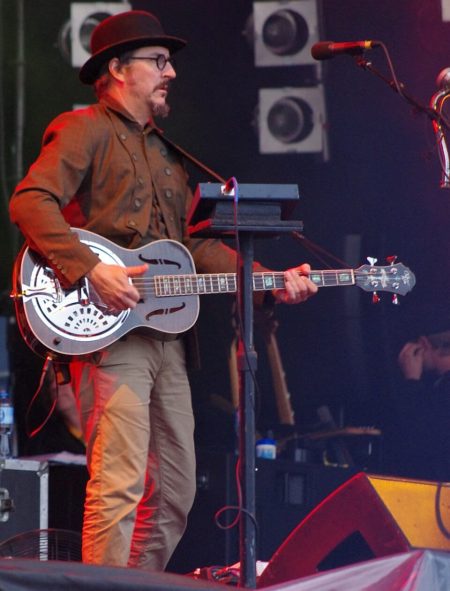
Three decades after its release, the Motley Crue album from 1994 holds its place as one of hard rock’s most wrongly dismissed records, built by a band willing to risk a $25 million deal on a sound their label never approved and their audience was not ready to hear.