The Shout at the Devil album arrived in September 1983 and struck the American hard rock scene with the force of something that had been building for years and could no longer be held back.
Affiliate Disclosure: I am an Amazon affiliate and if you purchase through any amazon links on this site i may earn a small commission at no extra charge to you.
Quick Navigation
- Shout at the Devil Album: How 1983 Changed Rock
- The Band Before the Breakthrough
- Tom Werman and the Sound of 1983
- Shout at the Devil Album Track by Track
- Inside the Shout at the Devil Album: Deeper Cuts
- The Title Track: More Than a Provocation
- The Controversy That Followed Everywhere
- Why the Shout at the Devil Album Still Sounds Like a Dare
- The Tour That Made the World Take Notice
- Legacy: The Album That Set the Template
- Get the Shout at the Devil Album on Amazon
- You Might Also Like
Shout at the Devil Album: How 1983 Changed Rock
By 1983, the Sunset Strip was producing bands at a rate no one could fully track, and most of them would not survive the decade.
Mötley Crüe had already demonstrated on their debut that they possessed something harder to manufacture than a good song: they had presence, danger, and the kind of commitment to performance that audiences feel in their chest before anyone plays a single note.
Their first album, Too Fast for Love, had been released on their own Leathür Records label and built a devoted following on raw energy alone.
Signing with Elektra Records gave them professional resources for the first time, and what they chose to do with those resources was the Shout at the Devil album.
It was not simply a step forward from where they had been; it was a full transformation into one of the most fully formed and visually defined hard rock acts America had yet seen.
Nothing else released in 1983 sounded like it, nothing released since has matched its specific charge, and the record arrived knowing exactly what it intended to do and to whom.
The Shout at the Devil album did not ask for permission, and that quality has never left it.
The Band Before the Breakthrough
Understanding the Shout at the Devil album requires understanding who walked into the studio to make it, and what each of them was already capable of before a single tape rolled.
Vocalist Vince Neil brought a voice that sat at the exact intersection of aggression and melody, capable of screaming over a wall of guitars without sacrificing the hook buried inside the noise.
Bassist and primary songwriter Nikki Sixx wrote material that was simultaneously theatrical and visceral, built for stages the band had not yet played but clearly intended to fill.
Guitarist Mick Mars had a tone and a rhythmic approach unlike anything else on the Sunset Strip: darker, more blues-rooted, and more deliberately threatening than the competition.
Drummer Tommy Lee had not yet become a household name, but he was already a physical force behind the kit that the rest of the band could build an entire show around.
Together, these four constituted a band that was technically raw but stylistically fully formed, possessing an identity that required no explanation once you heard it.
The complete Mötley Crüe story makes it clear that this specific lineup at this specific moment was something that could not have been engineered on purpose: it simply existed, fully assembled, waiting for a bigger stage.
Tom Werman and the Sound of 1983
Producer Tom Werman had already worked with Cheap Trick and Ted Nugent, and he understood precisely what Mötley Crüe needed: not polish, but focus.
He did not try to sand away what made the band dangerous.
He built the record around Mick Mars’s guitar tone, which was dense and slightly threatening in a way that could not have been manufactured if it had not already existed in the room.
Vince Neil’s vocals were mixed to cut through without overpowering the instruments, which was exactly the right call for a band whose rhythm section demanded to be heard at full volume throughout.
The drum production on this record remains one of the best examples of how a committed live-room rock performance should translate to a studio environment without losing any of its physicality.
Werman gave the band a sound that felt expensive and dangerous simultaneously, which matched the image they had already spent two years building on the Strip.
Everything about the Shout at the Devil album production serves the songs, and that discipline is one of the primary reasons the record has aged far better than most of its contemporaries.
Shout at the Devil Album Track by Track
The Shout at the Devil album opens with “In the Beginning,” a cinematic spoken-word introduction that functions like a curtain rising on something larger than a standard rock record.
What follows across ten tracks is one of the most relentlessly energetic and purposefully assembled records the Los Angeles hard rock scene ever produced.
Looks That Kill
Looks That Kill was the lead single and the track that introduced most of America to Mötley Crüe through heavy MTV rotation in the second half of 1983.
Mick Mars’s opening guitar riff is one of the defining hard rock sounds of the entire decade, immediately aggressive and structurally impossible to walk away from.
The accompanying music video, full of leather-clad imagery and theatrical menace, became a fixture on MTV and expanded the band’s audience from the Sunset Strip to the rest of the country in a matter of weeks.
Looks That Kill established the visual and sonic template that dozens of Los Angeles bands would spend the rest of the decade trying to replicate.
Too Young to Fall in Love
Too Young to Fall in Love followed as a second single and demonstrated that the band could construct songs with genuine melodic depth beneath all the attitude and leather.
Vince Neil’s vocal delivery on this track is more controlled than the album’s harder-charging moments, which makes the performance more effective rather than less.
The song confirmed that Mötley Crüe was not a one-track band but a group capable of sustaining commercial attention across an entire record without repeating themselves.
Helter Skelter
The decision to cover Helter Skelter by the Beatles closed the first side with a deliberate provocation.
It told listeners that this band was fully aware of rock history and was choosing to drag it through their own aesthetic without apology or explanation.
The version on this album is faster, heavier, and considerably less interested in being polite than the original, which is exactly the point it was trying to make.
Inside the Shout at the Devil Album: Deeper Cuts
The Shout at the Devil album rewards careful attention beyond its singles, with album cuts that reveal dimensions of the band that the hits alone cannot fully show.
“Bastard” is one of the most aggressive tracks on the record: a direct, unambiguous attack on authority figures that Nikki Sixx wrote with a personal fury that translates through the speakers without any dilution.
“Red Hot” carries a groove-driven menace that distinguishes it from the more theatrical tracks and demonstrates that the band could function in more than one register of intensity.
“Knock ‘Em Dead, Kid” and “Ten Seconds to Love” move through the second side of the record with the confidence of songs that had been shaped by extended live performance before they ever went near a studio.
The band’s earlier catalog of road-tested material, including Live Wire and Piece of Your Action from their debut, had built the stamina and the instinct for arrangement that made these performances possible.
The momentum built by the Shout at the Devil album carried directly into the band’s next major hit era, including Smokin’ in the Boys Room, which would become one of their most recognized songs just two years later.
Listeners who know the Shout at the Devil album only through its singles are genuinely missing what makes it a complete and coherent piece of work rather than simply a collection of hits.
The Title Track: More Than a Provocation
The song Shout at the Devil is one of the most frequently misread tracks in the Mötley Crüe catalog.
Nikki Sixx has stated clearly that “the Devil” in the song is not a religious reference but a stand-in for authority, conformity, and every force that told the band they did not belong on the stages they were determined to fill.
The song opens the album proper after the spoken intro and establishes the record’s tone in under four minutes of compressed, physical rock music that does not slow down once it starts.
Vince Neil delivers the title like a command rather than a request, which is exactly the right register for a lyric that is fundamentally about refusal and refusal only.
“God Bless the Children of the Beast,” the brief instrumental track positioned at the center of the album, adds a cinematic weight to the record that keeps it from collapsing into pure volume.
The title track remains one of the most performed and most recognized moments in the Mötley Crüe live catalog, decades after it was first committed to tape.
The Controversy That Followed Everywhere
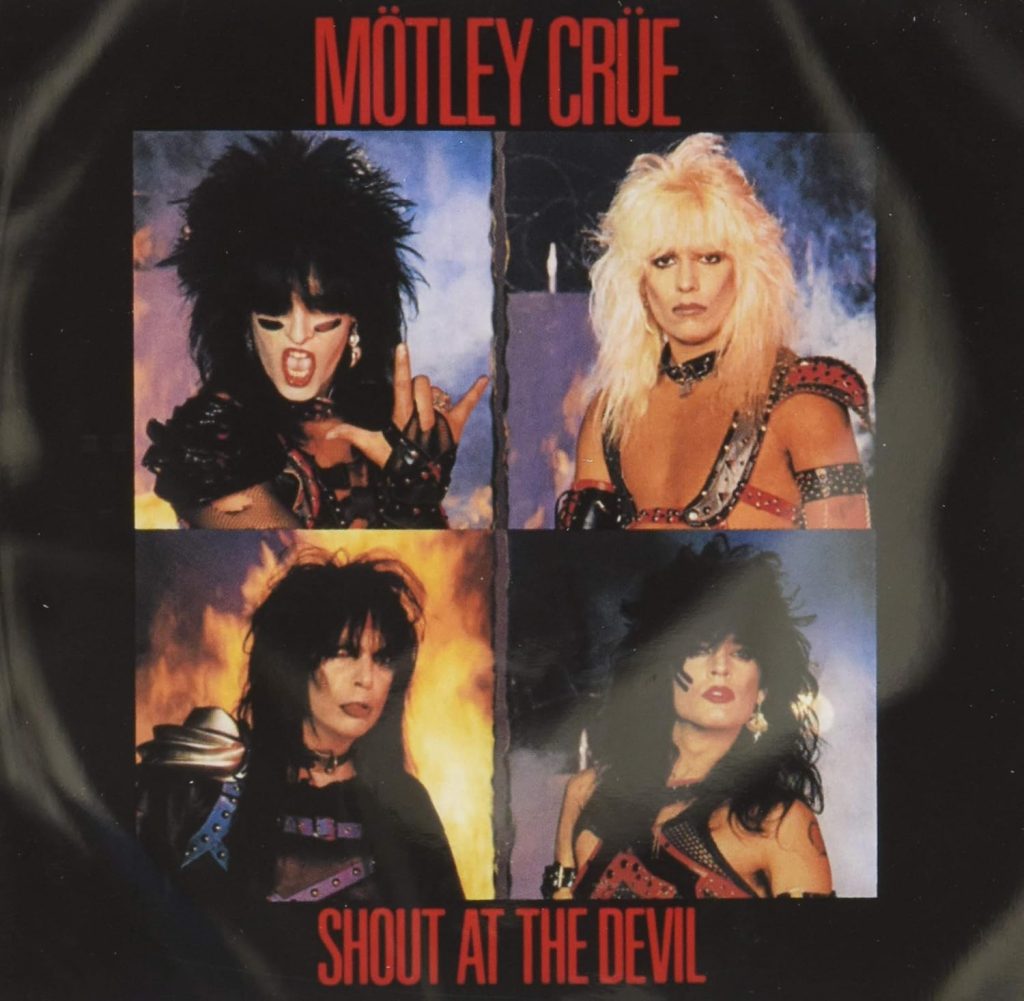
The pentagram imagery on the album cover generated a level of moral outrage in 1983 that the band had neither fully anticipated nor was particularly motivated to defuse.
Religious organizations called for boycotts.
Radio stations in certain markets refused to play the title track on the grounds that it constituted promotion of Satanism.
Parents’ organizations distributed the album cover as evidence of rock music’s corrupting influence on teenagers.
Each act of organized opposition translated directly into record sales, because the teenagers buying this album understood “the Devil” as a stand-in for every adult institution telling them what they were not allowed to enjoy.
The controversy also consistently obscured the genuine musical accomplishment underneath the imagery: this was a carefully produced, sharply written hard rock album that would have succeeded on its own terms without a single pentagram anywhere near it.
The gap between the theatrical exterior of the Shout at the Devil album and the disciplined craft underneath it is the most misunderstood aspect of the record’s reputation, and it remains misunderstood to this day.
Why the Shout at the Devil Album Still Sounds Like a Dare
More than forty years after its release, the Shout at the Devil album has not been tamed by familiarity or comfort.
Looks That Kill still arrives with the same physical force it had on first listen in 1983.
The title track still opens like a door being kicked in rather than politely knocked on.
Tom Werman’s production choices, which were aggressive for their era, have aged better than most contemporaries because he prioritized the performance over the period’s sonic fashions.
The tender side the band was always capable of, heard in songs like Home Sweet Home, was still two years away, which makes the unbroken intensity of this record feel like a document from a moment before the band allowed themselves any softness.
The Dr. Feelgood album that came six years later is rightly considered the band’s commercial and artistic peak, but the Shout at the Devil album is where they first became fully themselves, without compromise and without apology.
New listeners encountering this record today hear the source code for everything Los Angeles hard rock became in the decade that followed their arrival.
The Tour That Made the World Take Notice
The touring campaign behind the Shout at the Devil album was the moment Mötley Crüe crossed from Sunset Strip club act to national arena band, and that crossing happened faster than almost anyone in the industry had predicted.
The band opened for Ozzy Osbourne on his 1984 Bark at the Moon tour, putting them in front of massive audiences who had no particular reason to know who they were and consistently left knowing exactly who they were.
Tommy Lee’s visual presence behind the drum kit translated to large venues in a way that many drummers never manage: the further back you were sitting, the clearer it became that what was happening on stage was something beyond the standard.
The theatrical production the band brought to live shows in this period planted the seeds for what would become one of the most elaborately staged concert tours of the 1980s.
Mötley Crüe’s 2026 return to the stage has reminded a new generation why the songs from this album were written for that scale from their very first performance.
The ongoing discussion around the 2026 setlist choices keeps returning to Shout at the Devil era material as some of the most irreplaceable and loudest moments the band can play.
Legacy: The Album That Set the Template
The Shout at the Devil album did not just launch Mötley Crüe’s career; it established a complete set of operating principles that defined Los Angeles hard rock for the rest of the decade.
The visual identity, the lyrical posture, the balance between aggression and melody, and the insistence on theatrical live performance: every band that followed on the Sunset Strip was responding to this record whether they acknowledged the debt or not.
The album has been certified multi-platinum and has sold millions of copies across every format, which makes the ongoing critical tendency to dismiss it as a period artifact increasingly difficult to justify.
The complex situation surrounding Mick Mars’s departure from the band has not diminished the standing of the guitar work he contributed to this record, which remains some of the most distinctive playing of the entire era.
The full Wikipedia entry on Shout at the Devil documents the chart history, critical reception, and recording details in full for listeners who want the complete historical account.
The band’s official home at motley.com reflects how central this album remains to their identity: not as a starting point they have moved past, but as the opening chapter that everything else was built on.
Get the Shout at the Devil Album on Amazon
If there is a gap in your collection where this record should be, today is the right time to close it.
Pick up the Shout at the Devil album on Amazon and hear for yourself why this 1983 record still sounds like nothing that was supposed to be allowed to exist.
Whether you are returning to it after years away or encountering the Shout at the Devil album for the very first time, it will not leave you where it found you.