

Generation Swine by Mötley Crüe: 1997 Album Review
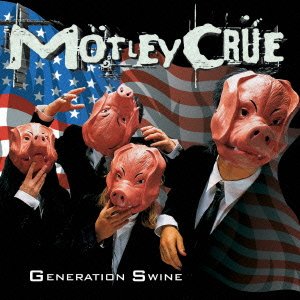
Generation Swine arrived on June 24, 1997, as the seventh studio album from Mötley Crüe and one of the most internally fractured records the band ever made.
Vince Neil was back in the lineup after three years away.
John Corabi was gone, Mick Mars had been largely sidelined in the studio, and producer Scott Humphrey was steering the sound toward industrial alternative territory.
The album debuted at number four on the Billboard 200 and sold over 80,500 copies in its opening week.
What the chart position does not tell you is how much conflict went into making Generation Swine, and why that conflict produced a record that still divides fans nearly three decades later.
Affiliate Disclosure: I am an Amazon affiliate and if you purchase through any amazon links on this site i may earn a small commission at no extra charge to you. This helps support classicrockartists.com and allows me to keep providing deep-dive content on the legends of rock. Thank you for your support!
Quick Navigation
- Generation Swine: Album Overview
- How Generation Swine Got Made
- Full Tracklist and Track-by-Track Guide
- Singles and Chart Performance
- Unexpected Collaborators
- Why Did Generation Swine Underperform?
- The Motley Brue Drink and Forgotten Promotions
- What Happened After Generation Swine?
- Legacy: Underrated or Just Different?
- FAQs About Generation Swine
- Where to Buy and Stream Generation Swine
- You Might Also Like
Generation Swine: Album Overview
Generation Swine was released on June 24, 1997, on Elektra Records, the final album Mötley Crüe would deliver to that label.
The record was produced by Scott Humphrey alongside Nikki Sixx and Tommy Lee, recorded across Can-Am Recorders in Tarzana and several Hollywood studios between 1995 and 1997.
The standard edition runs 49 minutes and 26 seconds across 13 tracks.
It peaked at number four on the Billboard 200 and earned RIAA Gold certification by August 27, 1997.
Total US sales reached approximately 306,000 copies according to Nielsen SoundScan, a number that reflects both the strength of the opening and the speed of the fade.
For a full account of where every member of the band was during this era and beyond, the complete story of Mötley Crüe’s members covers the arc in full.
How Generation Swine Got Made
The Corabi Years Come to an End
After the 1994 self-titled album sold poorly, the band fired manager Doug Thaler, dismissed producer Bob Rock, and terminated their accountant.
Allen Kovac was brought in as the new manager, and the direction of everything that followed changed with him.
Warner/Elektra CEO Doug Morris met personally with Sixx and Lee and made the demand clear: fire John Corabi and reunite with Vince Neil.
Sixx and Lee initially refused.
Sylvia Rhone, CEO of Elektra, eventually brokered the agreement that brought Neil back into the fold.
Corabi later stated in court proceedings that he wrote more than 80 percent of the material on Generation Swine, though he received an official credit on only two tracks: “Flush” and “Let Us Prey.”
His frustration with producer Humphrey’s constant revisions to his contributions ultimately caused him to quit the sessions before the album was completed.
The tracks that carry the Corabi fingerprint most clearly, including “Flush,” “Let Us Prey,” and “Confessions,” are denser and heavier than the rest of the record.
That contrast is audible to anyone who listens closely.
Why Vince Neil Came Back
Vince Neil‘s return was not a smooth creative handoff.
The material had been written around Corabi’s vocal range and style, and Neil struggled to adapt his voice to songs he had no hand in writing.
“There’s a lot on that album that I’d have changed had I been there from the start,” Neil said later.
“I didn’t think the producer really knew what he was doing, because he wouldn’t let me sing in the style I was accustomed to.”
The Dr. Feelgood album in 1989 had been the commercial and creative peak of the Neil-fronted lineup, producing songs like Kickstart My Heart that remain core to every set list.
Returning to the band three years later and being handed someone else’s album to finish was a fundamentally different proposition.
By 2008, Neil had come around to calling the album “terrible,” blaming “too much experimenting.”
Scott Humphrey and the Sidelining of Mick Mars
Mick Mars has spoken plainly about what it felt like to be removed from his own album.
He named producer Scott Humphrey “The Great Invalidator,” a description that captures exactly how the relationship functioned.
Virtually all of Mars’s recorded guitar contributions were rejected and replaced by session musicians, leaving the guitarist’s imprint largely absent from an album that carries his band’s name.
Mars named the Generation Swine period as the single greatest regret of his career in Mötley Crüe.
The story of the Mick Mars and Mötley Crüe feud goes deeper into how those tensions shaped the final years the band spent together.
Generation Swine: Full Tracklist and Track-by-Track Guide
The standard edition of Generation Swine runs 13 tracks across 49 minutes and 26 seconds.
A 2003 remaster added five bonus tracks including the previously unreleased “Wreck Me,” featuring all four members, and three session demos.
1. Find Myself (Sixx, Mars, Lee — 2:51)
“Find Myself” opens the record and announces immediately that this is not the Mötley Crüe of a decade prior.
Nikki Sixx takes partial lead vocal duties on the track, the first time he had ever sung lead on a Crüe studio recording.
The industrial production is front and center from the opening seconds, and the track clocks in at just under three minutes, as if the album wants to get past the disorienting first impression quickly.
2. Afraid (Sixx — 4:07)
“Afraid” became the album’s lead single and peaked at number ten on the US Mainstream Rock charts, the highest any Generation Swine single would reach.
Sixx wrote the song about the early stages of his relationship with Donna D’Errico, capturing the feeling of watching someone pull back out of fear of getting too close.
The full story behind the song is explored in the deep-dive on Afraid by Mötley Crüe.
The music video featured Hustler publisher Larry Flynt in a prominent role and was directed by Nancy Baldawil.
3. Flush (Sixx, Lee, Corabi — 5:02)
“Flush” is one of only two tracks on the album where John Corabi received an official writing credit, and the co-authorship is audible throughout the five-minute runtime.
The riff is denser and more uncompromising than anything Humphrey shaped on his own for this record.
“Flush” is the closest thing Generation Swine has to what a second Corabi-era album might have sounded like if the reunion with Neil had never happened.
4. Generation Swine (Sixx, Lee — 4:38)
The title track takes both its name and its outlook from Hunter S. Thompson’s 1988 book Generation of Swine, a collection of political columns as cynical about its cultural moment as this album is about its own.
Sixx borrowed Thompson’s lens and applied it to the music industry, to celebrity culture, and to the band’s own struggles through the mid-1990s.
The track sits mid-album and functions as the record’s philosophical center, pairing industrial production with a chorus that gestures back toward the band’s melodic roots.
5. Confessions (Mars, Lee, Humphrey — 4:19)
“Confessions” was written during the Corabi era, and Mars receives a writing credit here, one of the few tracks on the album where his contribution survived the production process intact.
The drum performance from Tommy Lee is among the most physical on the record, dense and driving in a way the cleaner Humphrey-produced tracks avoid.
The track is one of the album’s stronger moments and one of the clearest indicators of the musical direction that was scrapped when Corabi was let go.
6. Beauty (Sixx, Lee, Humphrey — 3:46)
“Beauty” was released as the album’s second single in December 1997 and reached number 37 on the Mainstream Rock charts.
Tommy Lee sings lead here, the first time he had taken lead vocal duties on a Mötley Crüe studio recording.
The track is a tonal departure from the harder material around it: more melodic, cleaner in its production, and closer to pop rock than anything else on the record.
7. Glitter (Sixx, Humphrey, Bryan Adams — 5:00)
“Glitter” carries one of the more surprising credits in the entire Mötley Crüe catalog: Bryan Adams co-wrote the track alongside Nikki Sixx and Scott Humphrey.
Adams is one of the last collaborators anyone would associate with the band, making this a genuinely unusual entry point for a Canadian pop-rock hitmaker into the world of industrial metal.
Rick Nielsen and Robin Zander of Cheap Trick also appear on the record, providing backing vocals on several tracks including “Glitter,” and their influence on the more melodic sections of the album is audible on closer listens.
8. Anybody Out There? (Sixx, Lee — 1:50)
“Anybody Out There?” runs under two minutes and functions more as an interlude than a full track.
The ambient texture and distant vocal place it firmly in transition territory, a palate cleanser between the album’s harder first half and the quieter second.
It is one of the tracks that contributes to the record’s reputation for inconsistency, though it serves its structural purpose.
9. Let Us Prey (Sixx, Corabi — 4:21)
“Let Us Prey” is the second track on which John Corabi receives a co-writing credit, and it is the one that most clearly demonstrates the sound of the 1994 lineup operating at full force.
The guitar construction is angular and relentless, the riff logic is entirely different from anything Humphrey produced on his own, and the track sits slightly outside the album’s dominant sound as a result.
Fans who favor the Corabi era consistently cite it as one of the stronger tracks on the record.
10. Rocketship (Sixx — 2:04)
“Rocketship” is a brief, melodic track that Nikki Sixx wrote as a tribute to Donna D’Errico.
Sixx sings lead vocal here, his second lead performance on the album after “Find Myself.”
At just over two minutes, the song works as a brief reprieve before the harder material that closes the standard edition.
11. A Rat Like Me (Sixx — 4:12)
“A Rat Like Me” returns to the industrial production that opens the record, with lyrics that are self-critical in a way that fits the period’s public mood around the band.
Written in the aftermath of the band’s commercial struggles and internal upheaval, the track’s worldview is consistent with the album’s broader cynicism.
It is not among the most discussed tracks in the Generation Swine conversation, but it holds its own in the record’s second half.
12. Shout at the Devil ’97 (Sixx — 3:42)
The industrial reimagining of Shout at the Devil was the first public indicator of where Generation Swine was headed, performed at the 1997 American Music Awards in January, months before the album’s release.
The original 1983 track appeared on the Shout at the Devil album, and the gap between that version and the 1997 reworking illustrates exactly how much had changed in the intervening 14 years.
The AMA performance has since been reported as a lip-sync to the original 1983 vocal track rather than a live performance from Neil, a detail that no major review of the album directly addressed at the time.
13. Brandon (Lee — 3:20)
“Brandon” closes the standard edition, written and sung entirely by Tommy Lee as a tribute to his newborn son Brandon Thomas Lee, born with then-wife Pamela Anderson.
It is historically significant as the first time Lee sang lead on a Mötley Crüe studio album, and it remains the most polarizing track in the Generation Swine sequence.
Some fans find it genuinely affecting; others find it entirely out of place on a hard rock record.
Both positions are defensible.
Singles and Chart Performance from Generation Swine
“Afraid” was released as a single on May 8, 1997 (with a radio premiere on January 22, 1997) and peaked at number ten on the US Mainstream Rock chart, the album’s commercial high point.
“Beauty” followed in December 1997 and reached number 37 on the same chart.
“Glitter (Remix)” circulated as a promo in 1997 but never received a proper commercial release.
“Find Myself” and “Shout at the Devil ’97” were also serviced as promos, with the latter landing its biggest moment at the AMA stage in January 1997.
A limited promo picture CD for “Afraid” featured two remixes: the Swine Mix and the Rave Mix, both produced by Humphrey, making them a collector’s item that most Generation Swine coverage never mentions.
Unexpected Collaborators on Generation Swine
Bryan Adams sharing a writing credit on a Mötley Crüe track is one of the more curious facts buried in the Generation Swine liner notes, and almost no review of the album covers it.
Adams co-wrote “Glitter” with Nikki Sixx and Scott Humphrey, putting one of the most commercially clean voices in Canadian rock squarely in the middle of an industrial metal record.
The Cheap Trick connection runs deeper than a single guest credit: Rick Nielsen and Robin Zander provided backing vocals on multiple tracks, and the melodic architecture of the album’s first half bears their influence in ways that go beyond what session vocalists typically provide.
Within the band, both Tommy Lee and Nikki Sixx took lead vocal duties for the first time on a Mötley Crüe studio album: Lee on “Brandon” and “Beauty,” Sixx on “Rocketship” and portions of “Find Myself.”
Every previous Mötley Crüe record had relied entirely on either Vince Neil or John Corabi for lead vocals, making Generation Swine the only album in the catalog where three different members share that role.
Why Did Generation Swine Underperform on the Charts?
A number four debut on the Billboard 200 followed by 306,000 total US sales tells a story of fast collapse rather than sustained momentum.
The band blamed Elektra Records, claiming the label had shifted its focus toward R&B acts and was not spending promotional resources on rock.
Sylvia Rhone pushed back, noting that Elektra had invested heavily to secure the AMA performance slot, a high-profile booking that cost significant money and leverage to arrange.
The more honest explanation involves the market itself.
By 1997, the commercial appetite for anything associated with 1980s glam metal had contracted sharply, and Generation Swine’s pivot toward industrial alternative rock alienated the core fanbase without pulling in a new one.
The shift satisfied neither the fans who wanted Dr. Feelgood-era rock nor the listeners who were buying Nine Inch Nails and Marilyn Manson records that year.
Rolling Stone gave the album two stars, writing that “fans who like to be rocked to pieces crave consistency, and Generation Swine is more schizophrenic than Wesley Willis.”
That review captured the market problem precisely, even if it missed some of the album’s genuine strengths.
The Motley Brue Drink and Other Forgotten Promotions
To promote Generation Swine, Skeleteens Beverages of Pasadena, California created a soft drink called “Motley Brue.”
The beverage contained large amounts of blue dye number one, specifically formulated to turn the consumer’s urine green.
The bottles featured the album’s pig logo and lyrics from Generation Swine songs printed on the label.
It is one of the more genuinely strange pieces of music marketing from the 1990s, and it barely registers in any retrospective coverage of the album.
Larry Flynt, who appeared in the “Afraid” video, also put the band on the cover of an issue of Hustler that year, extending a promotional relationship that gave the campaign a deliberately provocative edge.
Both moves were consistent with the album’s outsider stance, even if neither translated into sales.
What Happened After Generation Swine?
The period that followed Generation Swine was marked by collapse as much as activity.
Tommy Lee was arrested in 1998 and convicted of spousal battery against Pamela Anderson, serving four months in county jail in 1999.
His departure from the band, whether described as a resignation or a termination depending on who is telling the story, opened a turbulent window that produced New Tattoo in 2000 with a rotating lineup that included session drummer Randy Castillo.
Castillo died in February 2002, and the band continued with replacements before eventually beginning the reunion negotiations that brought the classic lineup back together.
Saints of Los Angeles arrived in 2008, with Tommy Lee back in the fold and the band operating as a functioning unit again for the first time in nearly a decade.
John 5 joined as guitarist in 2004 following Mick Mars’s departure, bringing a technically precise playing style that served the band’s live show through the post-reunion era.
Vince Neil has had his own complications in recent years, including details covered in the Vince Neil stroke, Mötley Crüe Vegas comeback, and new collection coverage.
The band remains active in 2026, with the Mötley Crüe 2026 Return of the Carnival of Sins Tour bringing the catalog back to arenas, and coverage of Mötley Crüe’s 2026 tour setlist changes tracking how the live show has evolved.
Generation Swine Legacy: Underrated or Just Different?
The reassessment of Generation Swine has been slow and uneven, but it has happened.
Fans who were teenagers in 1997 have come back to the record with the benefit of distance and found things in the Corabi-era tracks that they missed on first listen.
The album’s industrial and alternative textures, which seemed like a wrong turn at the time, hold up better in retrospect than some of the polished hair metal revivals of the same era.
“Let Us Prey,” “Flush,” and “Confessions” have a weight that rewards repeated listening in a way that more commercially oriented Mötley Crüe material sometimes does not.
Songs like Home Sweet Home define the band for casual listeners, but Generation Swine is where the band was most willing to break from what the audience expected.
Whether that willingness was courage, confusion, or the result of having someone else’s songs handed to them is a question the record never fully resolves.
The band’s continued presence in mainstream culture, including Mötley Crüe performing on American Idol and the subsequent American Idol fan reaction, confirms that the catalog still reaches audiences who were not alive in 1997.
Generation Swine is not the album those new fans discover first, but it is the one that tends to reveal the most about the band when they eventually find it.
FAQs About Generation Swine
Why is the album called Generation Swine?
The title comes directly from Hunter S. Thompson’s 1988 book Generation of Swine, a collection of political columns that treated American culture with aggressive contempt.
Nikki Sixx borrowed both the title and the spirit of Thompson’s cynicism, applying it to the music industry, to fame, and to the decade the band had just survived.
Thompson’s book is worth reading alongside the album: the Hunter S. Thompson Generation of Swine on Amazon provides the source material that the album’s title draws from.
Did John Corabi actually write most of Generation Swine?
Corabi stated in court proceedings that he wrote over 80 percent of the album’s content, though his official credit appears on only two tracks: “Flush” and “Let Us Prey.”
Most of the record’s heavier material reflects the sound and approach of the 1994 Corabi-era lineup, and the contrast between those tracks and the ones written after Neil returned is audible throughout.
Corabi has discussed this history in detail over the years; his Wikipedia entry includes the key events of the dispute.
Why does Mick Mars barely play on Generation Swine?
Producer Scott Humphrey repeatedly rejected Mars’s contributions and replaced them with session musicians.
Mars described Humphrey as “The Great Invalidator” and later named the Generation Swine sessions as the only regret of his time in Mötley Crüe.
The full context of that professional relationship is detailed at Wikipedia’s Generation Swine entry.
Who sang lead on Generation Swine besides Vince Neil?
Nikki Sixx sang lead on “Rocketship” and portions of “Find Myself.”
Tommy Lee sang lead on “Brandon” and “Beauty.”
It was the first time either had taken lead vocal duties on a Mötley Crüe studio album, making Generation Swine the only record in the catalog with three lead vocalists.
Did Bryan Adams really co-write a track on Generation Swine?
Yes.
Adams has a co-writing credit on “Glitter” alongside Nikki Sixx and Scott Humphrey, making it one of the more unexpected collaborations in classic rock history.
It is buried in the liner notes and almost no review of the album mentions it directly.
What was the Motley Brue promotional drink?
Skeleteens Beverages created a soft drink called “Motley Brue” to promote the album.
It was loaded with blue food dye number one, designed to turn the consumer’s urine green.
The bottles carried the album’s pig logo and printed lyrics from Generation Swine songs on the label.
It remains one of the stranger promotional items in classic rock marketing history.
Why did Generation Swine sell poorly despite a number four debut?
The album opened strong on the chart and then faded quickly because it satisfied neither the fans who wanted the 1980s Mötley Crüe sound nor the alternative rock audience it was targeting.
The band blamed Elektra’s promotional focus on R&B, while Elektra pointed to the AMA booking as evidence of significant investment.
The 1997 rock market had moved on, and Generation Swine arrived in the wrong window for any of its influences to find commercial traction.
Are there unreleased tracks from the Generation Swine sessions?
Yes.
The 2003 remaster included three previously unreleased tracks: “Wreck Me,” which features all four original members; “Kiss the Sky”; and an early demo version of “Rocketship.”
A Tommy Lee vocal demo of “Confessions” was also included.
Earlier sessions with Bob Rock reportedly produced additional tracks including “The Year I Lived in a Day” and “La Dolce Vita,” none of which have received an official release.
Where to Buy and Stream Generation Swine
Generation Swine is available on all major streaming platforms and in physical formats through Amazon.
Disclosure: This post contains affiliate links. If you purchase through these links, we may earn a small commission at no extra cost to you.
The standard CD and digital versions of Generation Swine are available via the link below.
Buy Generation Swine on Amazon
The Dirt, the band’s autobiography, remains the definitive behind-the-scenes account of everything that led to and followed from this record.
For the Hunter S. Thompson book that gave the album its name, Generation of Swine is one of Thompson’s most direct and readable collections.
Get Generation of Swine (Thompson) on Amazon
The full Mötley Crüe back catalog, including all studio albums, is also available at the official Mötley Crüe discography page and at AllMusic’s Generation Swine entry for critical context.
You Might Also Like
The band’s catalog contains albums that sold more and albums that sound more comfortable, but Generation Swine is the one that shows what happens when a band is caught between what it was, what the market wanted, and what a producer decided it should be, and any serious look at Mötley Crüe’s full story has to include a reckoning with Generation Swine.