

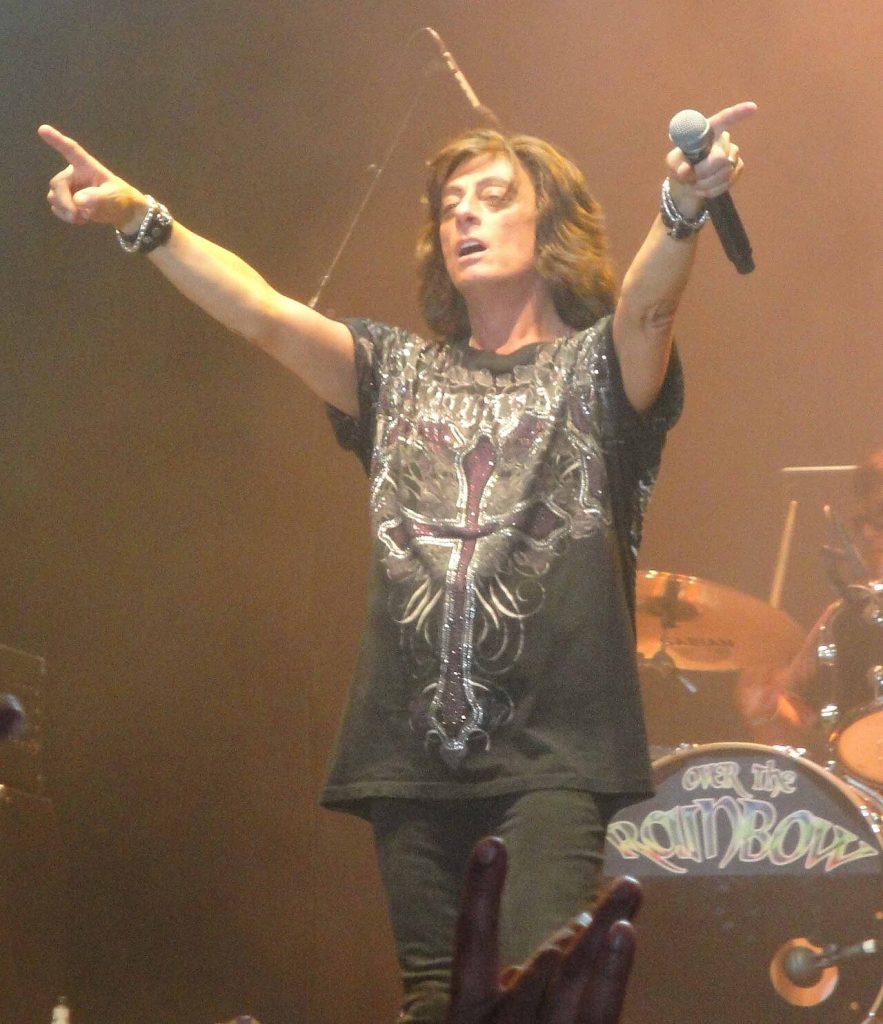
Joe Lynn Turner is one of classic rock’s most versatile vocalists, a New Jersey singer who fronted both Rainbow and Deep Purple at the peak of their commercial powers, delivering some of the most memorable melodic rock anthems of the 1980s.
📋 Table of Contents
- From Hackensack to Hard Rock: The Early Life of Joe Lynn Turner
- Fandango: Joe Lynn Turner’s First National Stage
- Joe Lynn Turner Joins Rainbow in 1980
- Rainbow’s Biggest US Hits: Stone Cold and Street of Dreams
- Three Albums, Three Years: Rainbow With Joe Lynn Turner
- After Rainbow: Solo Debut and the Road to Yngwie
- Joe Lynn Turner and Yngwie Malmsteen: The Odyssey Album
- How Joe Lynn Turner Became Deep Purple’s Mark V Singer
- Slaves and Masters: Deep Purple’s One Album with Turner
- The Departure: Why Joe Lynn Turner Left Deep Purple
- Rock Hall Induction 2016: Was Joe Lynn Turner Overlooked?
- Joe Lynn Turner’s Solo Career and Ongoing Projects
- The Hughes Turner Project with Glenn Hughes
- People Also Ask
- Watch Joe Lynn Turner: Time To Rock 2025
- Joe Lynn Turner’s Essential Deep Purple Era Albums
From Hackensack to Hard Rock: The Early Life of Joe Lynn Turner
Joe Lynn Turner was born Joseph Arthur Mark Linquito on August 2, 1951, in Hackensack, New Jersey.
He grew up in an Italian-American household where music was a constant presence from his earliest years.
As a child he took up the accordion, the instrument of choice in many Italian-American homes of that era.
By his early teens he had switched to guitar, teaching himself by listening closely to records he loved.
His influences ranged from Frank Sinatra and Enrico Caruso on one end to the raw energy of Led Zeppelin, Jimi Hendrix, and Free on the other.
In high school, Turner formed a band called Ezra, named after the poet Ezra Pound, whose setlist consisted largely of original material and Deep Purple covers.
Before Ezra, he had performed in a group called Filet of Soul alongside a young J.T. Taylor, who would later reach fame as the frontman of Kool and the Gang.
Neither early band broke beyond the local club circuit, but they gave Turner the foundation he needed: discipline on stage, the ability to hold a room, and the instinct to perform rather than simply sing.
His first real taste of what a career in music looked like came when he joined a band that actually had a record deal.
💡 Did You Know?
Joe Lynn Turner grew up equally influenced by Italian opera singers like Enrico Caruso and classic R&B vocalists alongside the hard rock bands he would later front. He also learned to play the accordion as a child before picking up guitar, giving him a musical foundation that ranged far beyond the rock world he became famous in.
Fandango: Joe Lynn Turner’s First National Stage
In 1977, Joe Lynn Turner joined the New Jersey rock band Fandango, and his career took its first real step forward.
The group signed to RCA Records and released four studio albums between 1977 and 1980: a self-titled debut, Last Kiss (1978), One Night Stand (1979), and Cadillac (1980).
Fandango’s sound was deliberately eclectic, blending R&B, country, jazz, and melodic hard rock into something that resisted easy classification.
Turner sang lead vocals and also played guitar on all four records, demonstrating a versatility that went well beyond the typical rock frontman role.
The band’s touring schedule put them on bills with major acts including The Allman Brothers Band, The Marshall Tucker Band, The Beach Boys, and Billy Joel.
Opening for artists of that caliber in front of large audiences gave Turner a level of live performance experience that club gigs alone could never provide.
Fandango found only modest commercial success despite solid critical notices, and the band dissolved around 1980.
Turner was left without a steady gig and running low on money.
He had no clear path forward.
Then one afternoon in 1980, his phone rang.
Joe Lynn Turner Joins Rainbow in 1980
The call came from a man named Barry Ambrosio, manager for guitarist Ritchie Blackmore’s band Rainbow.
Turner initially assumed it was a prank and nearly hung up before Ambrosio’s persistence convinced him the inquiry was genuine.
The call led to a trip out to Long Island, where Turner auditioned alongside Ritchie Blackmore and bassist Roger Glover in a recording studio.
One of the songs he was asked to sing was “I Surrender,” a track written by Russ Ballard.
Turner requested permission to rework some of the melody lines, they agreed, and he delivered a performance that stopped the room.
Blackmore handed him a beer, told him the job was his, and within the same night had Turner staying at a nearby hotel and writing new songs with the band.
Turner later recalled that he had needed the work so badly at the time that he didn’t even stop to appreciate the scale of what he was stepping into.
That focus, he believed, was what kept his nerves in check during the audition.
Rainbow had built a strong reputation in Europe and Japan under former vocalist Ronnie James Dio, but had not yet found consistent success in the United States.
Blackmore was specifically looking for a singer who could help the band reach American radio and MTV audiences, and Turner’s polished vocal style and pop-inflected delivery fit that plan precisely.
Rainbow’s Biggest US Hits: Stone Cold and Street of Dreams
“I Surrender,” the track Turner had reworked in his audition, became one of Rainbow’s most successful UK singles, peaking at number three on the UK charts.
“Stone Cold,” from the 1982 album Straight Between the Eyes, became Rainbow’s first US Top 40 hit and received heavy MTV rotation for its music video.
“Street of Dreams” and “Can’t Let You Go” continued to build the band’s American profile through the early 1980s.
Turner’s vocal approach was smoother and more accessible than Dio’s had been, and it arrived at exactly the moment when mainstream rock was shifting toward a more radio-friendly, video-ready sound.
The MTV era had just begun, and bands that made compelling videos suddenly had access to American audiences on a scale that touring alone could never match.
Turner performed well on camera, and Rainbow’s commercial output during this era benefited substantially from that quality.
Rainbow also performed a landmark concert in Japan during their 1984 farewell tour, where they played the Difficult to Cure album with a full symphony orchestra, a performance later released on home video as Japan Tour ’84.
By the time Rainbow folded in 1984, Turner had proven he could carry a band of that stature to real commercial success in markets where they had previously struggled.
Three Albums, Three Years: Rainbow With Joe Lynn Turner
Over four years with Rainbow, Joe Lynn Turner appeared on three studio albums: Difficult to Cure (1981), Straight Between the Eyes (1982), and Bent Out of Shape (1983).
Difficult to Cure featured one of the band’s most ambitious studio moments: an arrangement of Beethoven’s Symphony No. 9 woven into the title track, blending classical composition with hard rock instrumentation.
Straight Between the Eyes was the most commercially polished of the three, built for radio airplay and MTV impact with tight, hook-driven songwriting.
Bent Out of Shape, the final album with Turner, was arguably the strongest of the three and demonstrated how completely the new direction had embedded itself in the band’s identity.
The lineup during this period included keyboardist David Rosenthal, who would go on to serve as Billy Joel’s music director for decades, a connection that speaks to the caliber of musicians Blackmore assembled around Turner.
Turner regarded the version of Rainbow he fronted as a world-class live act, tight and powerful in a way that translated equally well to studio recordings and festival stages.
Rainbow disbanded in 1984 when Blackmore made the decision to rejoin the reunited Deep Purple Mark II lineup.
Turner was once again without a band, but this time he carried a much stronger reputation and a list of genuine hit records behind him.
💡 Did You Know?
When Joe Lynn Turner was offered the Deep Purple job in 1989, he already had invitations on the table from both Bad Company and Foreigner. He turned down both to join Deep Purple, a choice he attributed to his existing relationship with Ritchie Blackmore and the prestige of the Deep Purple name. It was, by any measure, the harder commercial bet at the time.
After Rainbow: Solo Debut and the Road to Yngwie
In 1985, Turner released his debut solo album, Rescue You, produced by Roy Thomas Baker, the man behind Queen’s classic records and work with The Cars.
The first single, “Endlessly,” received meaningful airplay on rock radio and MTV rotation, giving Turner a genuine commercial foothold outside of a band context.
He toured behind the record supporting Night Ranger and Pat Benatar, and also took on a small acting role in the TV movie Blue Deville.
Much of the album had been co-written with Al Greenwood, formerly of Foreigner, which gave it a polished AOR character that suited Turner’s voice well.
During this period Turner also contributed background vocals to recordings by Cher, Michael Bolton, Billy Joel, and Bonnie Tyler, accumulating studio experience across a wide range of pop and rock contexts.
The solo debut found a modest audience but did not produce the breakout moment that might have set Turner on a fully self-sufficient career path.
He remained active as a session contributor and occasional live performer through the mid-1980s, maintaining his profile while waiting for the right opportunity.
That opportunity arrived in late 1987, from a direction he had not anticipated.
Joe Lynn Turner and Yngwie Malmsteen: The Odyssey Album
In late 1987, neoclassical guitar virtuoso Yngwie Malmsteen restructured his band and brought Turner in to replace vocalist Mark Boals, also adding session bassist Bob Daisley.
Turner co-wrote nine of the twelve songs on the resulting album, Odyssey, released through Polydor Records on April 8, 1988.
Odyssey reached number 40 on the US Billboard 200 and held that chart position for eighteen weeks, making it Malmsteen’s highest-charting release on the Billboard 200 as of 2021.
The album also cracked the top 50 in five other countries, driven in part by the lead single “Heaven Tonight,” a track Turner had a primary hand in writing.
During the Odyssey world tour, Malmsteen’s band performed in the Soviet Union, with those shows recorded and later released in 1989 as Trial by Fire: Live in Leningrad.
The collaboration dissolved when brothers Anders and Jens Johansson departed, breaking apart the lineup that had made the record work.
Turner found himself at another crossroads, with offers from Bad Company and Foreigner on the table and a phone call from a band he had covered in an Ezra rehearsal room back in high school.
How Joe Lynn Turner Became Deep Purple’s Mark V Singer
Joe Lynn Turner officially joined Deep Purple in 1989, taking the microphone for what the band’s history books record as the Mark V lineup.
He was stepping into a seat vacated by Ian Gillan, one of the most recognizable voices in hard rock history, and the comparison was always going to follow him.
The Deep Purple lineup around Turner included Ritchie Blackmore on guitar, Roger Glover on bass, Ian Paice on drums, and Jon Lord on keyboards.
It was a band with enormous history behind it, including the Perfect Strangers reunion album that had re-established their commercial credibility in 1984.
Turner was aware of the weight of the role and described his own approach as trying to serve the music rather than compete with what had come before.
One thing he was willing to do that Gillan had not been: perform songs from the David Coverdale era of the band’s catalog during live shows.
That flexibility made him a more complete live performer for this particular version of the band, and it was appreciated by audiences who came expecting the full Deep Purple experience.
Sessions for what would become the Mark V album began with that lineup intact and a clear commercial goal in mind.
Slaves and Masters: Deep Purple’s One Album with Turner
The result of those sessions was Slaves and Masters, released in 1990 and the only studio album Turner recorded with Deep Purple.
The record was deliberately accessible, built around a more melodic, commercially oriented sound than the classic Mark II material.
The title track and “King of Dreams” were the album’s strongest moments, showcasing Turner’s ability to carry a Deep Purple arrangement with conviction and control.
Slaves and Masters peaked at number 87 on the US Billboard 200, a result that fell short of the expectations attached to a Deep Purple release.
The album drew mixed reviews, with some critics praising Turner’s performance while questioning whether the direction suited the band’s legacy.
A world tour followed in 1991, with Turner at the front of the stage delivering the classic catalog alongside the new material.
The European leg of that tour performed particularly well, and Turner’s willingness to sing songs from multiple Deep Purple eras gave the live shows a broader appeal than the album’s reception might have suggested.
Turner has consistently described that touring experience as a genuinely rewarding period despite the commercial disappointment of the album.
That song, Perfect Strangers, remained one of the most requested at shows, and Turner delivered it without hesitation.
The Departure: Why Joe Lynn Turner Left Deep Purple
Joe Lynn Turner left Deep Purple in late 1992, during recording sessions for what was intended to be the Mark V follow-up album.
The band had already begun work on new material, but internal pressure to reunite with Ian Gillan for the group’s 25th anniversary proved decisive.
Turner was released from the lineup, and the sessions he had participated in were abandoned or rewritten.
Gillan returned, and the resulting album became The Battle Rages On, released in 1993.
Turner has spoken about the experience with candor over the years, acknowledging that fan resistance to him as the new voice of Deep Purple was a factor throughout his tenure.
He has described the core difficulty honestly: fans found it hard to reconcile what they were used to hearing with something new, regardless of the quality of the performance on offer.
There were no acrimonious public statements from Turner at the time, but the departure represented an abrupt end to what had been a two-year run in one of rock’s most storied bands.
He was not included in the Deep Purple official band history when the group was inducted into the Rock and Roll Hall of Fame in 2016, a decision that generated its own controversy.
💡 Did You Know?
When Deep Purple were inducted into the Rock and Roll Hall of Fame in 2016, Joe Lynn Turner was not among the inductees despite having sung on a full studio album and completed a world tour with the band. Turner has publicly stated he does not feel slighted, calling the Hall a “money business” and noting that Ritchie Blackmore himself reportedly said Turner deserved recognition for his writing and vocal contributions to the Slaves and Masters period.
Rock Hall Induction 2016: Was Joe Lynn Turner Overlooked?
When Deep Purple were finally inducted into the Rock and Roll Hall of Fame in April 2016, the inductees named were Ritchie Blackmore, David Coverdale, Rod Evans, Ian Gillan, Roger Glover, Glenn Hughes, Jon Lord, and Ian Paice.
Joe Lynn Turner, who had sung on a complete studio album and toured the world with the band, was not included.
Turner addressed the omission directly in interviews, stating plainly that he did not feel slighted and did not believe in the Hall of Fame as an institution.
He described it as a business rather than a genuine recognition of artistic contribution, a view he shared with Ritchie Blackmore, who also chose not to attend the ceremony.
Ian Gillan acknowledged Turner by name during the induction proceedings, noting that all the people who had passed through Deep Purple across its many lineups contributed to the sum total of what the band became.
Turner later revealed that Blackmore had made a separate comment in an interview, stating that Turner deserved an award specifically for his songwriting and singing on the album, a public acknowledgment Turner described as meaningful coming from that source.
The episode highlighted how complicated Deep Purple’s legacy had become across its many lineups, and how difficult it is for institutions to fully capture a band that had reinvented itself more than once.
Joe Lynn Turner’s Solo Career and Ongoing Projects
After leaving Deep Purple, Joe Lynn Turner built a substantial solo discography that has continued to grow across three decades.
His second solo album, Nothing’s Changed, arrived in 1995 and featured contributions from guitarist Al Pitrelli.
The record demonstrated that Turner’s voice remained in excellent shape post-Deep Purple and that his songwriting instincts were sharper than ever.
He released Holy Man in 2000, Second Hand Life in 2007, and Belly of the Beast in 2022, his most recent studio effort and his ninth solo album overall.
During the 1990s and 2000s he also released two volumes of covers under the titles Under Cover and Under Cover 2, revisiting classic material with his own vocal interpretations.
In 2005, Turner made a guest appearance on Blackmore’s Night’s album The Village Lanterne, recording a new version of “Street of Dreams,” the Rainbow song he had originally co-written with Blackmore.
He founded the band Over the Rainbow in 2008, a project built around former Rainbow musicians including drummer Bobby Rondinelli and bassist Greg Smith, performing the classic catalog for audiences who wanted to hear it delivered by people who had actually recorded it.
Turner also formed the band Rated X in 2014, an outgrowth of the progressive rock project Mother’s Army, releasing a debut album that year.
He has remained a working musician across every era since his departure from Deep Purple, touring internationally and continuing to record new material.
The Hughes Turner Project with Glenn Hughes
One of the most celebrated chapters in Turner’s post-Deep Purple career came through his collaboration with former Deep Purple bassist and vocalist Glenn Hughes.
The two formed the Hughes Turner Project, releasing HTP in 2002 and HTP 2 in 2003.
Both albums paired two of Deep Purple’s most distinctive voices in a hard rock context that suited them both, and the project was well received by the band’s fanbase on both sides of the Atlantic.
Turner and Hughes had crossed paths numerous times in their parallel careers through the Deep Purple extended family, and the chemistry between their voices gave the project a credibility that solo efforts from either man alone could not quite replicate.
The project also toured internationally, giving fans who had grown up with the Burn and Slaves and Masters eras of Deep Purple the chance to see two of those lineups’ signature vocalists sharing a stage.
Turner has described working with Hughes as one of the more creatively satisfying partnerships of his career, citing their complementary approaches to melody and dynamics.
He also collaborated with Bulgarian guitarist Nikolo Kotzev on the progressive rock project Nostradamus, and worked with Japanese guitarist Akira Kajiyama on the album Fire Without Flame, continuing a pattern of international collaborations that has characterized much of his post-Deep Purple output.
People Also Ask
What bands was Joe Lynn Turner in?
Joe Lynn Turner has been a member of Rainbow (1980-1984), Deep Purple (1989-1992), and Yngwie Malmsteen’s Rising Force.
Earlier in his career he fronted Fandango (1977-1980), and he has also worked with Hughes Turner Project, Mother’s Army, Sunstorm, Rated X, and Over the Rainbow, among numerous other collaborations and solo projects spanning nearly five decades.
Why did Joe Lynn Turner leave Deep Purple?
Joe Lynn Turner left Deep Purple in late 1992 when the band decided to reunite with original vocalist Ian Gillan for their 25th anniversary.
The decision was made during active recording sessions for a follow-up to Slaves and Masters, and Turner was released from the lineup to make way for Gillan’s return, with the resulting sessions eventually producing The Battle Rages On (1993).
What is Joe Lynn Turner’s real name?
Joe Lynn Turner’s real name is Joseph Arthur Mark Linquito.
He was born on August 2, 1951, in Hackensack, New Jersey, and adopted the stage name Joe Lynn Turner early in his professional career with Fandango.
Is Joe Lynn Turner still performing?
Joe Lynn Turner continues to tour and record as a working musician.
His most recent studio album, Belly of the Beast, was released in 2022, and he remains an active presence on the international classic rock festival circuit, regularly performing material from his Rainbow, Deep Purple, and solo catalogs.
What are Joe Lynn Turner’s biggest hits with Rainbow?
Joe Lynn Turner’s biggest hits with Rainbow include “I Surrender” (which reached number three in the UK), “Stone Cold” (Rainbow’s first US Top 40 hit), “Street of Dreams,” and “Can’t Let You Go.”
These singles were recorded across the albums Difficult to Cure (1981), Straight Between the Eyes (1982), and Bent Out of Shape (1983).
Watch Joe Lynn Turner: Time To Rock 2025
In this 2025 interview, Joe Lynn Turner discusses family, his ongoing passion for performing, and what keeps him touring after more than four decades in professional rock music.
Joe Lynn Turner’s Essential Deep Purple Era Albums
Affiliate Disclosure: I am an Amazon affiliate and if you purchase through any amazon links on this site i may earn a small commission at no extra charge to you. This helps support classicrockartists.com and allows me to keep providing deep-dive content on the legends of rock. Thank you for your support!
As an Amazon Associate, I earn from qualifying purchases.

Slaves and Masters
Deep Purple, 1990
Essential listening
The one and only studio album featuring Joe Lynn Turner as Deep Purple’s vocalist. Includes “King of Dreams” and a polished, melodic take on the Deep Purple sound that stands as its own chapter in the band’s long history.

Perfect Strangers
Deep Purple, 1984
Essential listening
The Mark II reunion album that set the stage for Turner’s era in Deep Purple. Understanding Perfect Strangers is essential context for hearing what Slaves and Masters was responding to and where the band was positioned when Turner joined.

Machine Head
Deep Purple, 1972
Essential listening
The definitive Deep Purple album from the Mark II era that Turner inherited and performed live. Smoke on the Water and Highway Star are the songs he was expected to deliver every night on tour, and they are as powerful now as when they were recorded.

The Very Best of Deep Purple
Deep Purple, Compilation
Essential listening
The best single-disc entry point for any Deep Purple era, covering the band’s most essential recordings across multiple lineups. Ideal for listeners discovering the full scope of what Deep Purple accomplished over decades of recording.
You Might Also Like
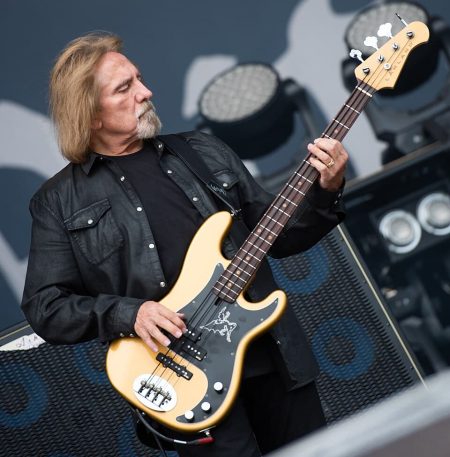
Joe Lynn Turner remains one of the most compelling vocalists to have passed through the Deep Purple extended family, a singer who delivered genuine commercial success for both Rainbow and Deep Purple at a time when each band needed it most, and whose solo body of work confirms that his talent never belonged to any single band.