

The Jerry Cantrell Degradation Trip album stands as one of the most emotionally raw and musically ambitious solo works in rock history.
Released in 2002 during a period of profound personal turmoil, this double album showcases the Alice in Chains guitarist at his most vulnerable and creative.
Following the success of Jerry Cantrell Boggy Depot (1998), Cantrell dove deeper into his psyche to create something far more expansive and challenging.
The album captures a musician wrestling with loss, addiction, and the uncertain future of his legendary band.
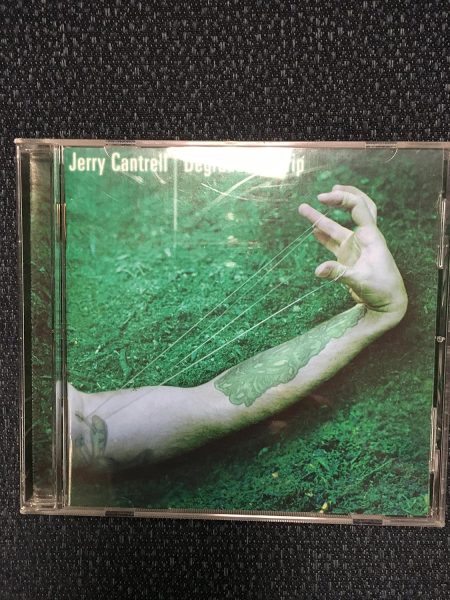
Jerry Cantrell Degradation Trip – Available on Amazon
Get Jerry Cantrell Degradation Trip (2002) on Amazon
Affiliate Disclosure: I am an Amazon affiliate and if you purchase through any Amazon links on this site I may earn a small commission at no extra charge to you. This helps support classicrockartists.com. Thank you for your support!
Table of Contents
Overview of Jerry Cantrell Degradation Trip
Jerry Cantrell Degradation Trip represents a monumental achievement in heavy rock songwriting and production.
The album was initially released as a single disc in June 2002, containing fourteen tracks.
Later that same year, Cantrell released the full double album version titled Degradation Trip Volumes 1 & 2.
This expanded edition featured twenty-five songs spanning over two hours of music.
The album showcases Cantrell’s signature sludgy guitar tone and haunting vocal melodies.
His songwriting explores themes of depression, isolation, and self-destruction with unflinching honesty.
The musical approach builds upon the foundation established in Alice in Chains Dirt (1992) while pushing into even darker territory.
Cantrell handles all guitar and vocal duties, demonstrating his complete artistic vision.
The rhythm section features bassist Robert Trujillo and drummer Mike Bordin, both from Ozzy Osbourne’s band.
Their contributions provide a thunderous backbone to Cantrell’s crushing riffs.
The production emphasizes weight and atmosphere over commercial polish.
Each song feels like a journey through psychological darkness.
Recording History and Production
The recording sessions for Jerry Cantrell Degradation Trip took place during 2001 at various Los Angeles studios.
Cantrell worked with producer Jeff Tomei, who had previously collaborated with him on Boggy Depot.
The sessions occurred during an extremely difficult period in Cantrell’s life.
Alice in Chains had been inactive since 1996, and vocalist Layne Staley’s health was deteriorating.
Cantrell channeled his grief and frustration into the most intense music of his career.
According to Wikipedia, the album was recorded with minimal overdubs to capture a raw, live feel.
Cantrell originally envisioned the project as a double album from the beginning.
However, his record label insisted on releasing a condensed single-disc version first.
The decision frustrated Cantrell, who felt the full vision required all twenty-five tracks.
The guitar tones were achieved using Cantrell’s signature G&L Rampage guitars through Mesa Boogie amplifiers.
He employed heavy downtuning, creating a sonic heaviness that rivals anything in the grunge era.
The vocal performances showcase Cantrell’s distinctive voice, which carries both melody and menace.
Unlike the harmonies he shared with Staley in Alice in Chains Jar of Flies (1994), these vocals stand alone.
The isolation in the vocal approach mirrors the album’s thematic content.
Tragically, Layne Staley passed away in April 2002, just two months before the album’s release.
This devastating loss added another layer of meaning to the already dark material.
Track-by-Track Highlights of Jerry Cantrell Degradation Trip
The opening track “Psychotic Break” immediately establishes the album’s uncompromising heaviness.
Its grinding riff and apocalyptic lyrics set the tone for everything that follows.
“Bargain Basement Howard Hughes” features one of Cantrell’s most memorable vocal melodies.
The song explores themes of isolation and paranoia with dark humor.
“Owned” delivers a punishing assault of downtuned guitars and pummeling drums.
The track showcases the chemistry between Cantrell, Trujillo, and Bordin.
“Angel Eyes” provides a brief respite with its acoustic introduction before exploding into electric fury.
The dynamic shifts demonstrate Cantrell’s sophisticated songwriting approach.
“Solitude” stands as one of the album’s most emotionally devastating moments.
Its slow, doom-laden progression creates an atmosphere of complete despair.
“Hellbound” features some of the heaviest riffing on the entire album.
The song’s relentless energy never lets up for its entire duration.
“Spiderbite” incorporates elements of the Alice in Chains sound while maintaining its own identity.
The guitar work recalls the intensity of Alice in Chains Rooster: Jerry Cantrell’s Letter to His Father in its emotional weight.
“Locked On” builds tension through repetitive riffing and increasingly desperate vocals.
The song captures the feeling of being trapped in destructive patterns.
“Gone” offers a moment of reflection with its slower tempo and introspective lyrics.
The track demonstrates Cantrell’s ability to convey vulnerability without sacrificing power.
“Castaway” features intricate guitar layering and one of the album’s most memorable choruses.
The production allows each instrument to breathe while maintaining crushing heaviness.
“Dying Inside” explores addiction and self-destruction with brutal honesty.
The lyrics leave no room for romanticizing the subject matter.
“Siddhartha” provides an unexpected moment of Eastern-influenced melody.
The song’s spiritual themes offer a glimmer of hope amid the darkness.
“Hurts Don’t It” closes the original single-disc version with crushing finality.
Its slow, grinding conclusion leaves listeners emotionally drained.
The additional tracks on the double album version expand the sonic palette further.
“Pig Charmer” and “Anger Rising” add even more weight to an already heavy collection.
Chart Performance of Jerry Cantrell Degradation Trip
Jerry Cantrell Degradation Trip debuted at number 33 on the Billboard 200 chart.
The album sold approximately 30,000 copies in its first week of release.
While these numbers were respectable, they fell short of major commercial success.
The timing of the release, coinciding with Staley’s death, created a somber context.
Many fans were still processing the loss of the Alice in Chains vocalist.
The album performed better on rock-specific charts, reaching number 6 on the Top Rock Albums chart.
The single “Anger Rising” received moderate airplay on rock radio stations.
However, the song’s uncompromising heaviness limited its mainstream appeal.
The double album version released in November 2002 charted at number 101 on the Billboard 200.
This lower position reflected the niche appeal of such an extensive and challenging work.
Critical reception was generally positive, with reviewers praising Cantrell’s ambition and honesty.
Some critics noted the album’s length as potentially overwhelming for casual listeners.
The album found its strongest audience among dedicated Alice in Chains fans and heavy rock enthusiasts.
Over time, the album has gained recognition as an underappreciated masterpiece.
Legacy and Cultural Impact
The legacy of Jerry Cantrell Degradation Trip has grown significantly since its initial release.
The album is now recognized as one of the most ambitious solo projects by any grunge-era musician.
Its unflinching exploration of darkness influenced a generation of heavy rock artists.
Bands in the doom metal and sludge metal genres cite the album as a major inspiration.
The production approach, emphasizing raw power over polish, became a template for authentic heavy music.
Cantrell’s willingness to release a double album in an era of declining physical sales demonstrated artistic integrity.
The album serves as a time capsule of a specific moment in rock history.
It captures the end of the grunge era and the uncertainty facing its surviving artists.
The emotional honesty in tracks like “Solitude” and “Dying Inside” resonates with listeners facing their own struggles.
You can experience the album’s power in this YouTube video featuring key tracks.
The album’s influence extends beyond music into discussions of mental health and addiction.
Cantrell’s openness about his struggles helped destigmatize these issues in rock culture.
The guitar work on the album influenced countless players seeking to achieve similar tonal heaviness.
Cantrell’s approach to downtuning and riff construction became widely studied and emulated.
The album also demonstrated that Alice in Chains’ sound was not solely dependent on Staley’s vocals.
This realization would prove important when the band eventually reformed with William DuVall.
Listener’s Note
When I first heard this album, I was unprepared for its emotional intensity and musical ambition.
I had expected something similar to Boggy Depot, but Degradation Trip operates on an entirely different level.
The opening moments of “Psychotic Break” immediately signaled that this would be a challenging listen.
I found myself drawn into Cantrell’s world of darkness and despair.
The album demands complete attention and refuses to function as background music.
I initially listened to the single-disc version and felt satisfied with the experience.
However, discovering the double album version revealed the full scope of Cantrell’s vision.
The additional tracks don’t feel like filler but rather essential pieces of the complete picture.
I recommend approaching this album when you have time to fully immerse yourself.
The emotional weight can be overwhelming, but the cathartic experience is worth it.
I found myself returning to specific tracks like “Solitude” and “Angel Eyes” repeatedly.
These songs capture something essential about the human experience of suffering.
The guitar tones Cantrell achieves throughout the album are simply stunning.
I spent hours trying to replicate them in my own playing.
This album reminds me why Jerry Cantrell is one of rock’s most important guitarists and songwriters.
Affiliate Disclosure: I am an Amazon affiliate and if you purchase through any Amazon links on this site I may earn a small commission at no extra charge to you. This helps support classicrockartists.com and allows me to keep providing deep-dive content on the legends of rock. Thank you for your support!
Collector’s Corner
For collectors, Jerry Cantrell Degradation Trip exists in several valuable formats.
The original single-disc version from June 2002 has become increasingly sought after.
The double album version, Degradation Trip Volumes 1 & 2, is the definitive edition.
Original pressings on vinyl are particularly prized by collectors.
The album’s heavy, sludgy sound translates exceptionally well to the vinyl format.
Japanese editions often include bonus tracks and enhanced packaging.
The album artwork, featuring dark and surreal imagery, complements the music perfectly.
Signed copies occasionally appear on the collector’s market and command premium prices.
The album represents an important piece of post-grunge history worth preserving.
Add Jerry Cantrell Degradation Trip to your collection today at Amazon and experience one of rock’s most uncompromising artistic statements.
FAQ About Jerry Cantrell Degradation Trip
Is Jerry Cantrell Degradation Trip a concept album?
While not a traditional concept album with a linear narrative, Jerry Cantrell Degradation Trip maintains thematic consistency throughout.
The album explores interconnected themes of addiction, isolation, and psychological darkness.
Cantrell has described it as a journey through his personal struggles during a difficult period.
The sequencing creates an emotional arc that feels intentional and cohesive.
Why did Jerry Cantrell release two versions of Degradation Trip?
Cantrell originally intended Degradation Trip to be a double album from the start.
His record label, Roadrunner Records, insisted on releasing a condensed single-disc version first.
The label believed a double album would be too commercially risky.
Cantrell negotiated to release the full double album version later in 2002.
This allowed fans to experience his complete artistic vision.
How does Degradation Trip compare to Alice in Chains albums?
Jerry Cantrell Degradation Trip shares the heavy, dark aesthetic of Alice in Chains.
However, it lacks the distinctive vocal harmonies that defined the band’s sound.
The album is arguably heavier and more uncompromising than most Alice in Chains material.
It showcases Cantrell’s songwriting without the collaborative input of other band members.
Fans of Alice in Chains Facelift (1990) will recognize similar sonic elements.
What guitar tunings did Jerry Cantrell use on Degradation Trip?
Cantrell employed various downtuned guitar configurations throughout Jerry Cantrell Degradation Trip.
Many tracks utilize drop D tuning and even lower variations.
Some songs feature tunings as low as drop B and drop A.
These extreme tunings contribute to the album’s crushing heaviness and doom-laden atmosphere.
Cantrell’s choice of tunings reflects his desire to create the heaviest music possible.
You Might Also Like
Alice in Chains Self Titled Album (1995)
Explore the final Alice in Chains album with Layne Staley, featuring some of the band’s darkest and most experimental work.
Alice in Chains Heaven Beside You (1995)
Discover Jerry Cantrell’s guitar showcase on this haunting track from the self-titled album.
Alice in Chains Black Gives Way to Blue (2009)
Experience Alice in Chains’ powerful return with new vocalist William DuVall, proving the band’s legacy could continue.
The Jerry Cantrell Degradation Trip album remains an essential listen for anyone seeking uncompromising heavy rock music.