Alice in Chains Check My Brain arrived on August 14, 2009, and answered fourteen years of studio silence with a triple number one single that nobody who had been waiting could have fully anticipated.
The song marked the first time a new Alice in Chains recording had appeared on radio since the band’s 1995 self-titled album, and it landed harder than even the most optimistic fans had dared to expect.
Affiliate Disclosure: As an Amazon Associate I earn from qualifying purchases. This helps support the site at no extra cost to you.
Quick Navigation
- Alice in Chains Check My Brain: The Long Wait Is Over
- Black Gives Way to Blue: A Return After Fourteen Years
- William DuVall Steps Into an Impossible Role
- Alice in Chains Check My Brain Lyrics: Seattle vs. LA
- Nick Raskulinecz and the Production Approach
- Alice in Chains Check My Brain Hits Triple Number One
- Alexandre Courtes Directs the Music Video
- First Number One Since No Excuses in 1994
- Alice in Chains Check My Brain and the Grammy Nomination
- Legacy and the Proof That Alice in Chains Endured
Alice in Chains Check My Brain: The Long Wait Is Over
Alice in Chains Check My Brain was the first official single from Black Gives Way to Blue, the band’s first studio album in fourteen years.
For anyone who had followed the band from the early 1990s, the arrival of new Alice in Chains music in 2009 carried the weight of everything that had happened in the years between.
Layne Staley’s death in April 2002 had left the question of whether the band would ever continue entirely open, and the answer took seven more years to materialize.
The complete story of how the band navigated that gap, and how they arrived at their 2009 lineup, is told in the Alice in Chains complete member story.
Alice in Chains Check My Brain was not just a single: it was a declaration that the band had made a decision and had something genuinely worth saying to justify it.
Black Gives Way to Blue: A Return After Fourteen Years
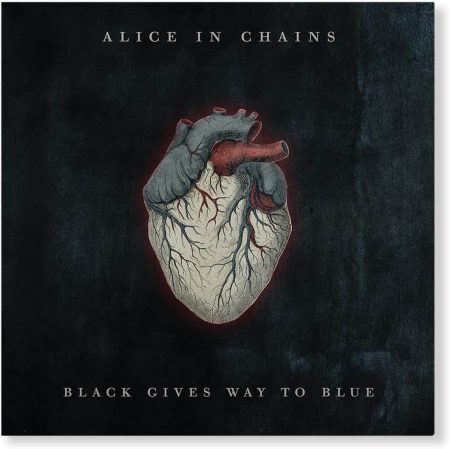
The Black Gives Way to Blue album arrived in September 2009 as the band’s first studio record since the 1995 self-titled release.
Alice in Chains Check My Brain landed two weeks before the album’s full release, giving radio programmers and listeners a first look at what the band had built across the fourteen years since the last Layne Staley session.
The 1995 album had ended with Again and Grind as its closing singles, and the broader catalog, including Would? and the Jar of Flies material, had never stopped circulating on rock radio through the decade.
The audience for Alice in Chains had not dissolved in those fourteen years: it had deepened as new listeners discovered the 90s catalog through compilations and early streaming platforms.
Check My Brain stepped into a space carefully maintained by the strength of older recordings, and it had to be good enough to justify reopening it after so long.
William DuVall Steps Into an Impossible Role
William DuVall joined Alice in Chains as lead vocalist in 2006, three years after Staley’s death and three years before Check My Brain put his voice in front of a mass audience for the first time.
Cantrell had known DuVall for years before the formal arrangement, and the decision to continue the band with a new vocalist rather than retire the name was not reached quickly by anyone involved.
DuVall took backing vocals on Check My Brain while Cantrell sang lead, a configuration that mirrored the Cantrell-forward vocal approach the band had used on Heaven Beside You in 1996.
The question that rock fans had been asking since 2006 was whether DuVall’s voice could share a single with the weight of the Alice in Chains catalog without the comparison to Staley becoming an impossible standard.
Check My Brain answered by sounding like Alice in Chains rather than an attempt to replicate Alice in Chains, which was the only answer that could have worked.
Alice in Chains Check My Brain Lyrics: Seattle vs. LA
Alice in Chains Check My Brain was written entirely by Jerry Cantrell, who set the lyrics in the context of his 2003 relocation from Seattle to Los Angeles.
Cantrell described the song’s tone as carrying a certain sarcasm: he was a Seattle person now living in LA, and the collision between those two identities gave the words their wry, self-aware quality.
The lyrics describe the dissonance of being somewhere you recognize has changed you in ways you are not entirely comfortable acknowledging, a feeling that extends well beyond its specific geographic setting.
The emotional texture sits in different territory from the addiction themes in earlier Staley-written lyrics like those running through Nutshell, though the underlying discomfort with one’s own circumstances is recognizable across the catalog.
Cantrell’s willingness to write from self-examination rather than self-pity gave Alice in Chains Check My Brain a quality that felt continuous with the band’s past without being beholden to it.
Nick Raskulinecz and the Production Approach
Producer Nick Raskulinecz brought to Black Gives Way to Blue the same clarity and heaviness he had applied to records by the Foo Fighters and Rush in the years preceding the session.
His production on Check My Brain kept the guitar tones powerful without losing the definition that had characterized the band’s recording work with Toby Wright across the 1990s albums.
Alice in Chains Check My Brain benefits from Raskulinecz’s understanding that the band’s identity was built on the relationship between Cantrell’s guitar and the vocal dynamic above it.
Randy Staub handled the mixing, and the result is a track that sounds firmly of 2009 without abandoning the sonic characteristics that had made the 1990s records so identifiable on rock radio.
Those production choices gave the single its best chance at success across multiple radio formats simultaneously, which is exactly what happened when it went to air in August 2009.
Alice in Chains Check My Brain Hits Triple Number One
Alice in Chains Check My Brain reached number one on Mainstream Rock, number one on Alternative Airplay, and number one on Hot Rock and Alternative Songs in the same chart cycle.
That simultaneous triple number one was the most emphatic commercial result the band had achieved since the early 1990s, arriving without the novelty factor that had driven the original breakthrough.
Rock programmers who had been rotating Man in the Box since 1991 were now in the position of playing new Alice in Chains music at the top of their format for the first time in fifteen years.
The chart sweep confirmed that the years between albums had not eroded the band’s position with rock radio, and that the audience itself had been waiting with more patience and loyalty than anyone had assumed.
No other rock act returning from a fourteen-year studio absence had accomplished anything comparable at the top of multiple format charts in the history of the genre.
Alexandre Courtes Directs the Music Video
The music video was directed by Alexandre Courtes and premiered on September 14, 2009, two weeks before the album’s September 29 release date.
Courtes brought a visual register that matched the song’s tonal balance between heaviness and dark irony, establishing a distinct visual identity for the 2009-era band separate from the 1990s videos.
The Check My Brain video gave William DuVall his first substantial visual introduction to the rock television and streaming audience, putting a face to the voice that had been playing on radio since August.
For rock fans of a certain age who had watched Alice in Chains videos on MTV in the early 1990s, seeing the band in a new video in 2009 carried its own particular weight.
The clip built significant streaming momentum in the two weeks between its premiere and the album’s release, functioning as the most effective possible advertisement for what Black Gives Way to Blue contained.
First Number One Since No Excuses in 1994
The Mainstream Rock chart number one was Alice in Chains’ first at that position since No Excuses reached the top in 1994, a fifteen-year gap between chart-topping singles on the format.
That gap contained the declining years of Staley’s addiction, his death, the band’s long dormancy, the reformation, and the entire process of making a new record that could stand without apology beside the old ones.
Heaven Beside You had reached number three in 1996, and tracks like Angry Chair had remained in rock radio rotation through the 2000s without generating a new number one position for the band.
Closing that fifteen-year gap with a chart-topping single was not only a commercial achievement: it was confirmation that the decision to continue had been the correct one.
Anyone who had been listening since Down in a Hole in 1993 understood what that number one position meant in a way that raw chart statistics could not fully capture.
Alice in Chains Check My Brain and the Grammy Nomination
Alice in Chains Check My Brain was nominated for Best Hard Rock Performance at the Grammy Awards, adding industry recognition to the commercial dominance the single had already achieved across three chart formats.
The nomination placed the song alongside the strongest hard rock performances of 2009 in a field that had changed considerably from the grunge-heavy landscape surrounding the band during their original commercial peak.
Grammy recognition in 2009 confirmed that the comeback had been taken seriously by the industry as well as by the audience that had driven it to the top of the charts.
Alice in Chains accepted that recognition as a band that had earned the right to stand alongside acts that had been releasing music continuously through the fourteen years they were absent.
For everyone who had followed Alice in Chains Check My Brain from its August release through the chart run and into awards season, the Grammy nod represented something larger than a single performing well in any given year.
Legacy and the Proof That Alice in Chains Endured
Black Gives Way to Blue became one of the most successful rock albums of 2009, and Check My Brain served as the proof of concept that the comeback had not just been attempted but fully achieved.
The song holds its place within a catalog that stretches from the band’s breakthrough years in Seattle through the acoustic devastation of the Jar of Flies period and forward to this 2009 return, without apologizing for the distance between any of those points.
The band has continued to release music and tour extensively with William DuVall in the years since, cementing his place in the lineup in a way that only a number one single could have begun.
Fifteen years after its release, Alice in Chains Check My Brain still sounds like a band that refused the easier alternative and chose, against considerable pressure and doubt, to keep going.