

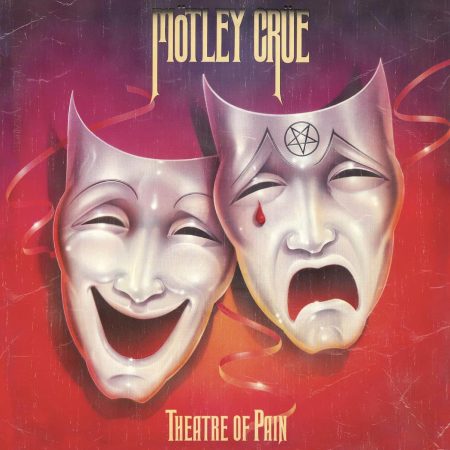
The Theatre of Pain album landed on June 21, 1985, when Motley Crue was navigating its most turbulent period as a band.
Affiliate Disclosure: I am an Amazon affiliate and if you purchase through any amazon links on this site i may earn a small commission at no extra charge to you. This helps support classicrockartists.com and allows me to keep providing deep-dive content on the legends of rock. Thank you for your support!
Quick Navigation
What the Theatre of Pain Album Revealed About Motley Crue
The Theatre of Pain album marked a sharp turn from the heavier sound the band had built on the Shout at the Devil album.
Where “Shout at the Devil” leaned into darkness and aggression, this third record reached for glam theatrics and commercial accessibility.
Pink clothing, heavy stage makeup, and theatrical costuming became the band’s new visual language.
That shift divided fans who had followed the band from its earliest records.
Some heard compromise where there had been danger.
Others heard a band broadening its reach without abandoning its energy.
Looking back, the album captures a band under enormous pressure making a record that was more emotionally exposed than anything they had attempted before.
The personal circumstances surrounding these sessions gave the music a rawness that its glossier production could not fully conceal.
Whatever its flaws, this record documented Motley Crue at a crossroads, and crossroads records are often the ones that define a band’s story more completely than their most polished work.
Recording the Theatre of Pain Album in Hollywood
Pasha, Cherokee, and Record Plant West
Motley Crue recorded the Theatre of Pain album across three Hollywood studios: Pasha Studios, Cherokee Studios, and Record Plant West.
The sessions took place in early 1985, during one of the most chaotic stretches in the band’s history.
In December 1984, vocalist Vince Neil was involved in a drunk driving crash that killed Nicholas Dingley of Hanoi Rocks and injured two others.
Nikki Sixx has spoken openly about the grip that heroin addiction had on him during this period, describing the sessions as both productive and deeply unstable.
Tommy Lee‘s drumming on these recordings shows no sign of the off-tape disorder: his performances are locked, powerful, and precise throughout.
Producer Tom Werman shaped the sessions toward the commercial direction the band and label agreed on.
The result was a record that sounded brighter and more radio-ready than its predecessor, at the cost of some of the edge that had made “Shout at the Devil” so compelling.
Whether that trade was worth making has been debated by fans and the band members themselves in the four decades since.
Track by Track: Side One
Home Sweet Home: The Ballad That Changed Everything
“Home Sweet Home” is the track that defined not just this album but an entire era of rock ballads.
When it arrived at number five on Side One, nothing in Motley Crue’s catalog had prepared listeners for a piano-led, emotionally direct power ballad of this scale.
The MTV video became one of the most played clips the network had run to that point, cementing “Home Sweet Home” as the signature Motley Crue moment of 1985.
Its success created a template for the glam metal ballad that bands spent the rest of the decade trying to replicate.
The song charted separately from the album, driving ongoing radio play long after the record’s initial release.
Smokin’ in the Boys Room: The Cover That Worked
“Smokin’ in the Boys Room,” a cover of Brownsville Station’s 1973 track, became one of the album’s two main singles.
Motley Crue stripped out some of the original’s looseness and replaced it with hard rock momentum that suited their arena-focused sound.
The track reached number 16 on the Billboard Hot 100, making it one of the band’s most successful chart singles to that point.
“City Boy Blues” opens the album with a blues-influenced riff that immediately signals the band’s interest in a wider sonic range.
“Louder Than Hell” follows with more familiar aggression, bringing back the energy of earlier records before the album pivots toward its softer moments.
“Keep Your Eye on the Money” sits between those extremes, a mid-tempo track that keeps the album moving before “Home Sweet Home” arrives.
Track by Track: Side Two
“Tonight (We Need a Lover)” opens Side Two with an urgency that sets the pace for the record’s second half.
“Use It or Lose It” keeps the momentum hard and direct, one of the more straightforward rock tracks on the album.
“Save Our Souls” is the side’s most ambitious moment, reaching for a dramatic quality that connects to the album’s theatrical title.
“Raise Your Hands to Rock” functions as a crowd-participation track translated to tape: big chorus, simple message, maximum energy.
“Fight for Your Rights” closes the album with a direct and deliberate statement, a track that pulls the energy back up after some of the record’s more restrained moments.
Side Two as a whole does not reach the commercial heights of “Home Sweet Home,” but it delivers consistent hard rock energy that holds the album together.
Fans who wanted to hear the harder edge from earlier records like “Looks That Kill” found it here in concentrated form.
Theatre of Pain Album Chart Performance and Sales
The Theatre of Pain album reached number 6 on the Billboard 200 in the United States.
That peak position represented a significant step up from “Shout at the Devil,” which had topped out at number 17.
The album was certified 4x Platinum by the RIAA, reflecting sales of over four million copies in the United States alone.
It reached number 36 in the United Kingdom, where the band’s profile was growing through heavy touring and MTV play.
“Smokin’ in the Boys Room” and “Home Sweet Home” drove radio and video airplay that kept the album in the public consciousness for months after its release.
The commercial success of Theatre of Pain established Motley Crue as a genuine arena rock act rather than a cult favorite.
That commercial foundation was what eventually supported the chart run that included “Kickstart My Heart” four years later.
Tom Werman’s Production on Theatre of Pain Album
Tom Werman produced the Theatre of Pain album, continuing his working relationship with the band that had begun on the Elektra rerelease of “Too Fast for Love.”
Werman’s production decisions on this record were the most commercially deliberate of their collaboration.
The mix is brighter and more polished than “Shout at the Devil,” with less low-end aggression and more room for melody.
That approach served “Home Sweet Home” perfectly: the piano sits clearly in the front of the mix and the strings arrive with full emotional weight.
It served the harder tracks less well, with some critics arguing that “Louder Than Hell” and “City Boy Blues” lost the rawness that made similar material on earlier records hit harder.
Werman would produce one more Motley Crue record, Girls Girls Girls, before the band moved to Bob Rock for the Dr. Feelgood album.
In the context of the full Werman era, Theatre of Pain stands as his most pop-influenced work with the band.
The Band Behind the Album
The lineup for these sessions was the classic four: Vince Neil on vocals, Nikki Sixx on bass, Tommy Lee on drums, and Mick Mars on guitar.
For the full story of each member’s background and what happened to them afterward, the complete story of Motley Crue’s members covers the details.
Vince Neil‘s vocal performances on this album carry a weight that is hard to separate from knowledge of what he was going through legally and personally at the time.
“Home Sweet Home” in particular sounds like a man singing about something real, not a constructed emotion.
Mick Mars adapted his playing to the album’s wider stylistic range, delivering blues-influenced work on “City Boy Blues” and stadium-ready riffs on “Louder Than Hell” within the same record.
The fact that this band made a coherent album under the circumstances they were dealing with in early 1985 is itself a significant part of the record’s story.
Theatre of Pain Album Tour of 1985 and 1986
The Theatre of Pain album sent Motley Crue on an extensive touring campaign that ran from July 1985 through March 1986.
The production was elaborate: risers, smoke effects, theatrical costuming, and pyrotechnics that matched the album’s dramatic visual identity.
Every night, the band played to arenas full of fans who had arrived for both the hard rock and the spectacle, and Motley Crue delivered both with equal commitment.
The set included material from “Shout at the Devil” alongside the new record, with “Shout at the Devil” remaining a live staple that the crowd responded to as powerfully as anything from the new album.
The glam image that the band embraced for this tour became one of the defining visual templates of 1980s hard rock.
Dozens of Sunset Strip acts studied what Motley Crue were doing on this tour and built their own stage shows around similar principles.
Today, the Motley Crue 2026 Return of Carnival of Sins tour continues to bring these songs to a new generation of live audiences.
The setlist changes on the 2026 tour have included Theatre of Pain material, confirming that these tracks still hold their power in an arena setting.
Theatre of Pain Album in Motley Crue’s Full Catalog
The Theatre of Pain album sits between two defining records in the band’s catalog, and understanding where it fits requires looking at what came before and after it.
The “Shout at the Devil” album was the band’s heavy metal peak, darker and more aggressive than anything they had done or would do.
Theatre of Pain pivoted toward commercial hard rock and arena accessibility, setting up the commercial infrastructure that made what came next possible.
The Girls Girls Girls album in 1987 pulled back toward rawness while keeping the mainstream reach that Theatre of Pain had opened up.
The Dr. Feelgood album in 1989 then represented the band at their most polished and most commercially successful.
Theatre of Pain was the bridge record that made the full commercial arc possible, and it deserves to be understood in that context rather than measured only against what came before it.
Without the commercial foundation this album built, the band might never have reached the arena-headlining position from which they made “Too Young to Fall in Love” and everything that followed.
The Controversy Around This Album
Theatre of Pain has always been the Motley Crue record that provokes the most disagreement.
Longtime fans who followed the band through “Too Fast for Love” and “Shout at the Devil” felt the commercial shift was too sharp.
Even some band members have expressed mixed feelings about the record in retrospect, citing the rushed nature of the sessions and the personal circumstances that made focused creative work difficult.
The tensions that later emerged within the band had roots in the period when this album was made, when the gap between the band’s public image and private reality was at its widest.
The challenges Vince Neil has faced in recent years are a reminder of how much history the men who made this record are carrying.
What the controversy misses is that Theatre of Pain succeeded precisely because it was honest about the band’s emotional state in 1985.
“Home Sweet Home” did not feel calculated because it was not: it was a musician writing about what he actually felt, and listeners knew the difference.
Deeper Cuts Worth Your Attention
“City Boy Blues” is the album’s most underrated track, a blues-influenced opener that shows Mars in a mode he rarely got to explore on Motley Crue records.
“Save Our Souls” is the most theatrically ambitious moment on Side Two, reaching for a dramatic quality that the album’s title promises but rarely delivers elsewhere.
“Use It or Lose It” is the kind of fast, direct hard rock track that the band did effortlessly, and it deserves more attention than it typically receives in discussions of this record.
“Tonight (We Need a Lover)” opens Side Two with a sense of urgency that the record needs at that point in its running order.
Fans of the band’s emotional ballads who found “Without You” from the Dr. Feelgood era to be their most affecting moment will find the seed of that approach in “Home Sweet Home.”
The DNA of tracks like “Don’t Go Away Mad” can be traced directly back to the songwriting decisions made on this record.
Motley Crue Song Catalog Highlights
Theatre of Pain sits in the middle of a catalog that spans four decades of hard rock history.
The “Live Wire” and “Piece of Your Action” era captured the band at its most raw and unpolished.
The Girls Girls Girls era then delivered “Girls Girls Girls,” a track that combined the band’s bluesy instincts with their arena-ready commercial confidence.
The Dr. Feelgood era produced tracks like “Dr. Feelgood” itself, a song that showed the band at maximum commercial and musical efficiency.
Later output including “Hooligan’s Holiday” from the Corabi period and “Afraid” showed the band willing to push into unfamiliar sonic territory.
Theatre of Pain connects all of those phases: it is where the band first demonstrated the range that allowed them to sustain a career across changing eras.
Motley Crue in 2025 and 2026
Motley Crue has continued to find ways to reach new audiences while staying connected to the records that made them.
Their performance on American Idol placed the band in front of a primetime television audience that included many who were introduced to them for the first time.
The audience reaction to that American Idol performance showed that the music carries across generations without needing translation.
Whether it is “Home Sweet Home” or “Smokin’ in the Boys Room,” the songs from Theatre of Pain have a directness that does not age.
For current news on the band’s activities, the classic rock news section on this site covers developments as they happen.
For show schedules and updates, the tour updates section keeps pace with the band’s 2025 and 2026 activities.
Legacy and Lasting Influence
The Theatre of Pain album’s most enduring contribution to rock history is “Home Sweet Home,” a track that did more to popularize the arena rock power ballad than almost any other single recording.
The bands that came after Motley Crue on the Sunset Strip studied this album closely and took its lessons about balancing hard rock energy with emotional accessibility.
The theatrical visual identity of this era, the glam costumes and theatrical staging, became the definitive look of late-1980s hair metal.
Later Motley Crue lineup shifts, including periods with John Corabi on vocals and eventually John 5 on guitar, moved the band’s sound in new directions.
But the commercial foundation and mainstream accessibility that Theatre of Pain established remained the standard against which all subsequent Motley Crue work was measured.
The official Motley Crue website at motley.com keeps the full catalog accessible for fans exploring the band’s history.
The full Wikipedia entry for this record at Theatre of Pain on Wikipedia documents chart history, recording details, and critical reception for those who want to go deeper.
Frequently Asked Questions About the Theatre of Pain Album
What album is Theatre of Pain?
Theatre of Pain is the third studio album by Motley Crue, released on June 21, 1985, on Elektra Records.
What is the most famous song on Theatre of Pain?
“Home Sweet Home” is the album’s signature track and one of the most influential rock ballads of the 1980s.
How did Theatre of Pain perform on the charts?
The album reached number 6 on the Billboard 200 and was certified 4x Platinum by the RIAA in the United States.
Who produced Theatre of Pain?
Tom Werman produced the album at Pasha Studios, Cherokee Studios, and Record Plant West in Hollywood, California.
Is Theatre of Pain Motley Crue’s best album?
Critical consensus tends to favor “Shout at the Devil” or “Dr. Feelgood,” but Theatre of Pain is the record that proved the band could reach a mainstream audience, and “Home Sweet Home” remains one of their most enduring songs.
What was Motley Crue going through when they made Theatre of Pain?
The sessions took place while Vince Neil faced criminal charges stemming from the December 1984 car crash, while Nikki Sixx was struggling with heroin addiction, making it one of the most personally turbulent recording periods of the band’s career.
Explore More Classic Rock
This site covers rock history from the 1960s through the 1990s, organized by era and artist.
Browse artist profiles for deep dives into the musicians behind the records.
The members-of hub pages cover the complete lineups and histories of classic rock’s most important bands.
The 80s iconic hits and stories section is the natural home for Theatre of Pain’s era.
Earlier decades are covered in the 60s, 70s, and 90s sections.
All album reviews are indexed for easy browsing, and the ClassicRockArtists.com home page is the starting point for everything on the site.
You Might Also Like
Disclosure: This post contains affiliate links.
If you purchase through these links, we may earn a small commission at no extra cost to you.
Four decades on, the Theatre of Pain album remains one of the rawest and most emotionally honest records Motley Crue ever made.