

Deep Purple albums in order tell the story of one of hard rock’s most influential bands across nine different lineups.
From their 1968 debut through 2024’s =1, the band has released 23 studio albums over more than five decades.
This guide walks through every era in sequence, with links to full reviews of the 12 studio albums covered in depth on this site.
Whether you are new to the band or filling gaps in your collection, this is the complete chronological map of Deep Purple’s catalog.
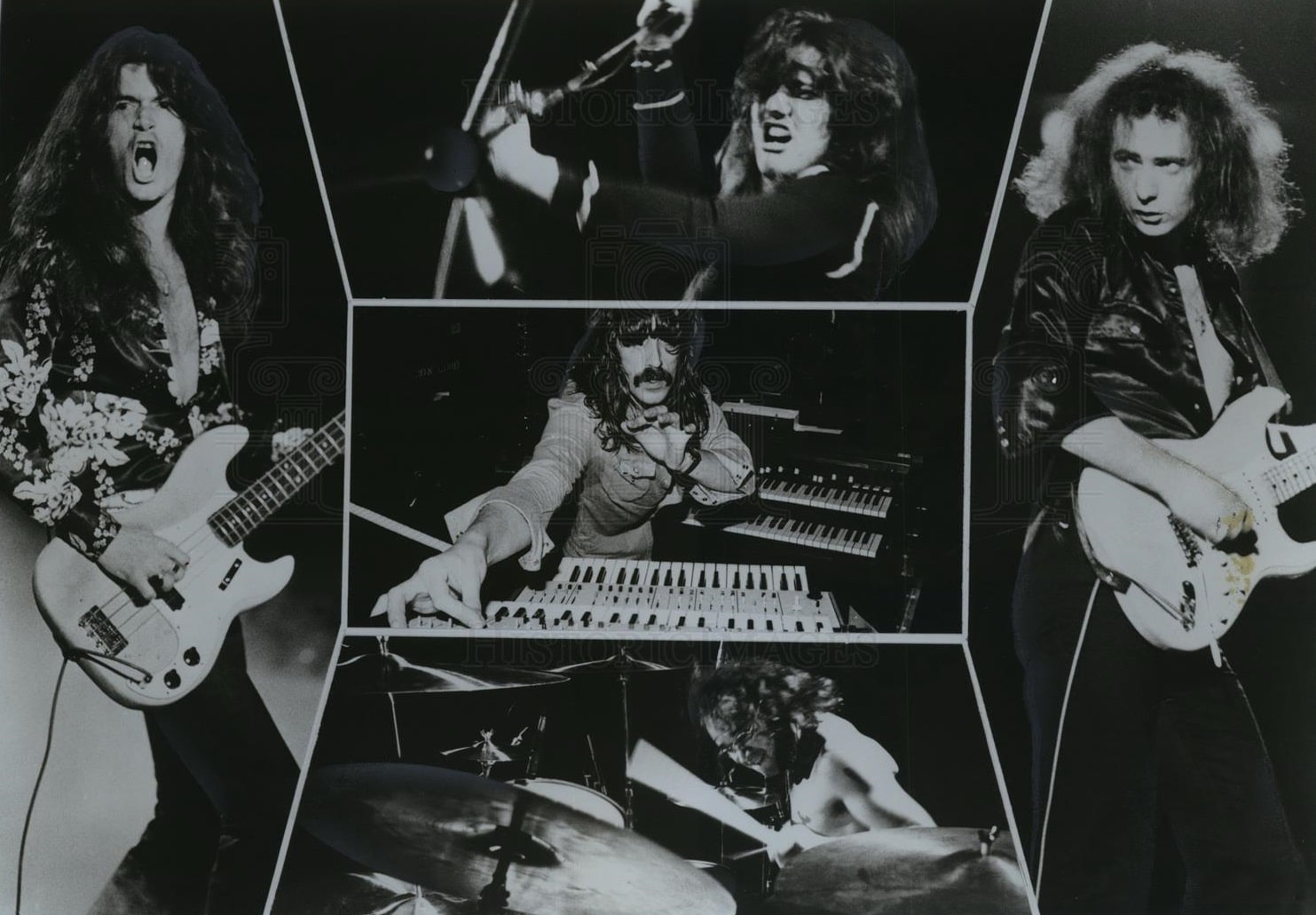
Photo credit: Wikimedia Commons, public domain
📋 Table of Contents [+]
Deep Purple Albums in Order: Where to Start
Deep Purple albums in order fall into distinct eras, each defined by a different lineup known by fans as a “Mark.”
The band has cycled through nine official lineups since forming in Hertford, England, in 1968.
New listeners often start with the Mark II era, home to Machine Head and the songs most people already know.
Long-time collectors work through the catalog chronologically to hear how the band’s sound evolved.
Either way, this list covers every studio album in the order it was released.
Deep Purple Albums in Order: The Mark I Era
The band’s first lineup featured Rod Evans on vocals, Ritchie Blackmore on guitar, Jon Lord on keyboards, Nick Simper on bass, and Ian Paice on drums.
Their debut, Shades of Deep Purple, arrived in 1968 and leaned toward psychedelic rock with classical touches.
You can read the full Shades of Deep Purple review for a track-by-track breakdown.

The band followed it the same year with The Book of Taliesyn, a second Mark I record that built on the same sound.
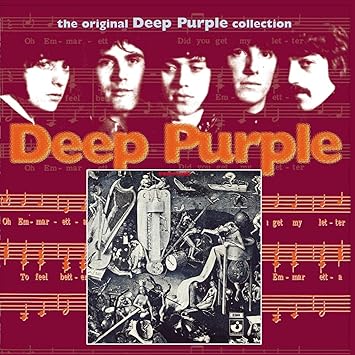
A self-titled third album, Deep Purple, closed out the era in 1969 before Evans and Simper were replaced.
That September, the band also performed Jon Lord’s Concerto for Group and Orchestra with the Royal Philharmonic at the Royal Albert Hall.
💡 Did You Know?
Deep Purple was almost called Roundabout, an idea from former Searchers drummer Chris Curtis for a band where members would rotate in and out.
The Mark II Breakthrough
Ian Gillan and Roger Glover replaced Rod Evans and Nick Simper in 1969, forming the classic Mark II lineup.
This version of the band recorded four studio albums that defined hard rock’s early sound.
Deep Purple in Rock arrived in 1970 and marked a much heavier direction than the band’s earlier work.
Read the full Deep Purple in Rock review for the complete story.

Fireball followed in 1971, experimenting with faster tempos and denser arrangements.
See the full Fireball review for details on every track.

Machine Head landed in 1972 and remains the band’s most commercially successful studio album.
It includes “Smoke on the Water” and “Highway Star,” recorded using the Rolling Stones Mobile Studio in Montreux.
Read the complete Machine Head review for the full recording story.

Who Do We Think We Are closed the Mark II era in 1973 amid rising tension between Gillan and Blackmore.
See the Who Do We Think We Are review for how that tension shaped the record.
The Mark III Era: Burn and Stormbringer
David Coverdale and Glenn Hughes joined in 1973, bringing soul and funk influences into the band’s sound.
Burn arrived in 1974 as the first studio album from this new lineup.
Read the full Burn review for the details on this transitional record.

Stormbringer followed later that same year, pushing further into funk and soul territory.
Check out the full Stormbringer review for the complete breakdown.

That direction frustrated Ritchie Blackmore enough that he left the band in 1975 to form Rainbow.
Come Taste the Band and the Split
American guitarist Tommy Bolin replaced Blackmore for 1975’s Come Taste the Band.
Read the full Come Taste the Band review for the story behind this often-overlooked record.

The band split apart in 1976, and Deep Purple would not release another studio album for eight years.
💡 Did You Know?
Tommy Bolin died in December 1976, just over a year after Come Taste the Band was released, making it his only studio recording with the band.
The Reunion Years
The classic Mark II lineup reunited in 1984 after Ritchie Blackmore rejoined Ian Gillan, Roger Glover, Jon Lord, and Ian Paice.
Perfect Strangers marked that reunion and became one of the band’s biggest comeback records.
Read the full Perfect Strangers review for the full story of the band’s return.

The House of Blue Light followed in 1987, though internal tension was already building again.
See the full House of Blue Light review for how that tension shows up on the record.

Gillan left again after that tour, briefly reshaping the band’s direction once more.
The Joe Lynn Turner Album
Joe Lynn Turner, formerly of Rainbow, took over lead vocals for 1990’s Slaves and Masters.
Read the full Slaves and Masters review for the details of this one-album lineup.

Gillan returned for 1993’s The Battle Rages On, restoring the band’s classic vocal sound.
Blackmore left the band for good later that year, replaced first by Joe Satriani and then permanently by Steve Morse.
The Modern Era: Rapture of the Deep
Steve Morse’s tenure produced Purpendicular in 1996 and Abandon in 1998, followed by Bananas in 2003.
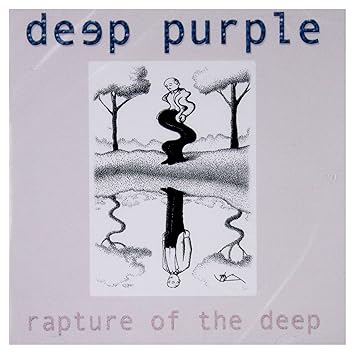
Rapture of the Deep arrived in 2005 as one of the strongest records of the Morse era.
Read the full Rapture of the Deep review for the complete details.
Don Airey replaced Jon Lord on keyboards in 2002 after Lord’s retirement, forming the longest-lasting lineup in the band’s history.
That lineup recorded Now What?! in 2013, Infinite in 2017, and Whoosh! in 2020.
Turning to Crime followed in 2021 as a covers album recorded during the pandemic.
Simon McBride joined in 2022, and the band’s most recent studio album, =1, arrived in 2024 as his first full recording with the group.
Deep Purple Albums in Order: Full Chronological List
| Year | Album | Lineup |
|---|---|---|
| 1968 | Shades of Deep Purple | Mark I |
| 1968 | The Book of Taliesyn | Mark I |
| 1969 | Deep Purple | Mark I |
| 1970 | Deep Purple in Rock | Mark II |
| 1971 | Fireball | Mark II |
| 1972 | Machine Head | Mark II |
| 1973 | Who Do We Think We Are | Mark II |
| 1974 | Burn | Mark III |
| 1974 | Stormbringer | Mark III |
| 1975 | Come Taste the Band | Mark IV |
| 1984 | Perfect Strangers | Mark II |
| 1987 | The House of Blue Light | Mark II |
| 1990 | Slaves and Masters | Mark V |
| 1993 | The Battle Rages On | Mark II |
| 1996 | Purpendicular | Mark VII |
| 1998 | Abandon | Mark VII |
| 2003 | Bananas | Mark VIII |
| 2005 | Rapture of the Deep | Mark VIII |
| 2013 | Now What?! | Mark VIII |
| 2017 | Infinite | Mark VIII |
| 2020 | Whoosh! | Mark VIII |
| 2021 | Turning to Crime | Mark VIII |
| 2024 | =1 | Mark IX |
Deep Purple Albums in Order: Where They Rank Today
Machine Head consistently ranks as the most celebrated entry across every list of Deep Purple albums in order.
Deep Purple in Rock and Burn usually follow close behind among longtime fans.
The band’s Rock and Roll Hall of Fame induction in 2016 renewed interest in the full catalog, including the less-discussed 1990s records.
With Simon McBride now leading the guitar chair, =1 gave the band its strongest reviews in years.
Ian Paice remains the only member to appear on every album in this list, a streak that now spans nine lineups.
People Also Ask About Deep Purple Albums in Order
How many studio albums does Deep Purple have?
Deep Purple has released 23 studio albums since their 1968 debut, Shades of Deep Purple. Their most recent, =1, came out in 2024 and was the first to feature guitarist Simon McBride.
What is Deep Purple’s best album?
Machine Head (1972) is widely considered Deep Purple’s best and most commercially successful album. It features “Smoke on the Water” and “Highway Star” and represents the peak of the Mark II lineup.
What was Deep Purple’s first album?
Deep Purple’s first album was Shades of Deep Purple, released in 1968 by the band’s original Mark I lineup featuring Rod Evans on vocals.
What is Deep Purple’s most recent album?
Deep Purple’s most recent studio album is =1, released in July 2024. It was produced by Bob Ezrin and marked guitarist Simon McBride’s first full studio recording with the band.
How many lineups has Deep Purple had?
Deep Purple has had nine official lineups, known to fans as Mark I through Mark IX. Drummer Ian Paice is the only member to have appeared in every one of them.
Watch: Every Deep Purple Album in Order
Essential Deep Purple Albums to Own
Affiliate Disclosure: I am an Amazon affiliate and if you purchase through any amazon links on this site i may earn a small commission at no extra charge to you. This helps support classicrockartists.com and allows me to keep providing deep-dive content on the legends of rock. Thank you for your support!
As an Amazon Associate, I earn from qualifying purchases.
Machine Head
1972 Classic
The most essential entry in any Deep Purple albums in order list.
Home to Smoke on the Water and Highway Star.
Deep Purple in Rock
1970 Landmark
The album that turned Deep Purple into a hard rock band.
A key turning point in the band’s history.
Burn
1974 Mark III Debut
The soul and funk-infused start of the Coverdale-Hughes era.
A dramatic shift in the band’s sound.

The Very Best of Deep Purple
Career-Spanning Collection
A shortcut through every era covered in this list.
The best starting point for new fans.
You Might Also Like

Working through Deep Purple albums in order shows a band willing to reinvent itself again and again without losing its identity.
For the full story of the people behind these records, visit the Members of Deep Purple hub.
See the complete Deep Purple discography on Wikipedia or browse release data on MusicBrainz for even more detail.
Nine lineups and 23 albums later, Deep Purple albums in order still add up to one of rock’s greatest bodies of work.