

Layne Staley remains one of the most powerful and haunting voices in the history of rock music.
His ability to channel raw pain into melody set him apart from every other singer of the 1990s.
As the frontman of Alice in Chains, he helped create a sound that was heavier than most grunge, darker than most metal, and more emotionally honest than almost anything on the radio at the time.
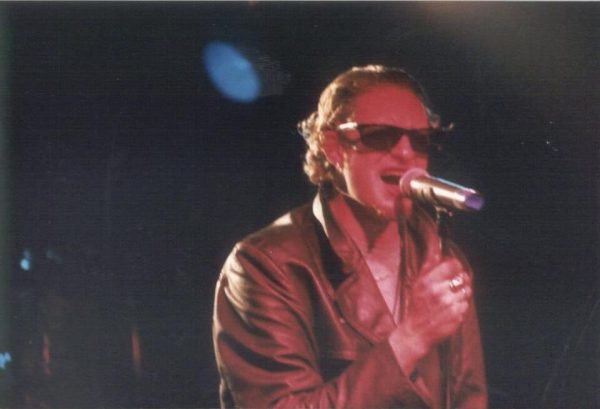
I remember hearing his voice for the first time on a late-night MTV broadcast in 1990.
It stopped me cold.
That voice, strained and soulful and unlike anything I had ever heard, belonged to a skinny kid from the Pacific Northwest who would go on to change rock music forever.
Quick Navigation
- Layne Staley Early Life and Childhood
- First Bands and the Road to Alice in Chains
- Facelift and the Rise of Alice in Chains
- Dirt: The Album That Changed Everything
- Jar of Flies and Mainstream Dominance
- The Self-Titled Album and MTV Unplugged
- Layne Staley and Mad Season
- The Voice: What Made Layne Staley Unique
- Personal Struggles and Withdrawal
- Layne Staley Final Years and Passing
- Legacy and Lasting Influence
- Remembering Layne Staley Today
- Video: The Untold Truth Of Layne Staley
- Video: Jerry Cantrell on Meeting Layne Staley
- Explore Layne Staley Music
- You Might Also Like
Layne Staley Early Life and Childhood
Layne Thomas Staley was born on August 22, 1967, at Overlake Hospital in Bellevue, Washington.
His parents, Phillip Blair Staley and Nancy Elizabeth Layne, raised him in nearby Kirkland.
His father was a construction worker, and his mother worked as a receptionist.
When Staley was seven years old, his parents divorced.
His mother later married Jim Elmer, and young Layne took his stepfather’s surname for a time while attending Meadowdale High School in Lynnwood.
Music found him early.
He joined a rhythm band in Bellevue when he was just two or three years old, the youngest member of the group.
By age nine, he wrote in a school assignment that he wanted to be a singer when he grew up.
He picked up drums around age twelve and spent hours in his room playing along to records.
His musical tastes ran deep and wide.
Black Sabbath was his first major influence, and he loved Deep Purple, Van Halen, and Judas Priest.
He also admired Prince and David Bowie, artists whose creative fearlessness would later echo in his own work.
First Bands and the Road to Alice in Chains
Though Staley started as a drummer, he always knew singing was his true calling.
In 1984, at age seventeen, he joined a glam metal band called Sleze as their vocalist.
The group performed around the Seattle area and even made a brief cameo in a low-budget 1985 film called Father Rock.
By 1986, Sleze had morphed into a band called Alice N’ Chains, which played speed metal covers by bands like Slayer and Armored Saint.
Bandmate Johnny Bacolas later described the eighteen-year-old Staley as timid but possessing “star qualities” and a remarkably soulful voice.
The pivotal moment came in 1987.
Staley met guitarist Jerry Cantrell at a party in Seattle.
Cantrell was homeless at the time, and Staley invited him to move into the Music Bank rehearsal studios where Staley was living and working.
The two became roommates for over a year, bonding over a shared love of heavy music.
Cantrell later recalled, “I knew that voice was the guy I wanted to be playing with. It sounded like it came out of a 350-pound biker rather than skinny little Layne.”
After Staley’s version of Alice N’ Chains broke up, he briefly joined a funk band and brought Cantrell along.
Cantrell agreed to play on one condition: Staley had to join his band, which included drummer Sean Kinney and bassist Mike Starr.
The group, initially called Diamond Lie, eventually adopted the name Alice in Chains with Staley’s blessing from his former bandmates.
A local promoter named Randy Hauser funded their first demo recordings.
The resulting tape, known as The Treehouse Tapes, earned them a deal with Columbia Records in 1989.
Facelift and the Rise of Alice in Chains
Alice in Chains released their debut album, Facelift, on August 21, 1990.
The album arrived just months before Nirvana would blow the doors off the mainstream with “Smells Like Teen Spirit.”
The second single, “Man in the Box,” became a breakthrough hit on MTV and rock radio.
Staley wrote the lyrics, drawing from his frustrations with censorship and organized religion.
His vocal performance on that track, with its distinctive “talk box” style wail, announced the arrival of a completely original voice.
Facelift eventually earned triple-platinum certification.
The band earned a Grammy nomination for Best Hard Rock Performance for “Man in the Box” in 1991.
They toured relentlessly, sharing stages with Soundgarden, Pearl Jam, and Van Halen.
I saw them open for Iggy Pop at a packed club in 1990, and the crowd was stunned into silence by the sheer force of Staley’s voice filling the room.
Dirt: The Album That Changed Everything
Released in September 1992, Dirt was the record that elevated Alice in Chains from a promising band to an essential one.
The album debuted at number six on the Billboard 200 and went on to sell over five million copies.
Every song on Dirt felt like a confession.
Staley’s lyrics tackled addiction, self-destruction, and despair with an honesty that was almost uncomfortable.
Singles like “Would?” and “Rooster” became rock radio staples.
“Them Bones” opened the album with a dissonant, lurching riff that hit like a punch to the chest.
“Down in a Hole” showed a more vulnerable side, with Staley and Cantrell’s harmonies creating an almost hymn-like beauty.
“Angry Chair” and “Rain When I Die” further demonstrated the range and depth of the album.
Staley designed the sun logo that appeared on the album’s inlay, adding a visual signature to match the sonic one.
During the supporting tour with Ozzy Osbourne, Staley broke his foot but continued performing, sometimes from a wheelchair.
That year, Alice in Chains also appeared in Cameron Crowe’s film Singles, performing “It Ain’t Like That” and “Would?” on the soundtrack.
Jar of Flies and Mainstream Dominance
In 1994, Alice in Chains released Jar of Flies, a mostly acoustic EP that became the first EP in music history to debut at number one on the Billboard 200.
Nobody expected that.
The EP featured “No Excuses,” which became one of the band’s biggest radio hits.
“I Stay Away” earned a Grammy nomination and showcased a softer, more orchestral side of the band.
“Nutshell” remains one of the most emotionally devastating songs in the Alice in Chains catalog.
The stripped-down arrangements let Staley’s voice occupy center stage without distortion or heavy production.
You could hear every crack, every tremor, every ounce of feeling.
By this point, bassist Mike Starr had been replaced by Mike Inez, who brought a slightly different dynamic to the rhythm section.
The success of Jar of Flies proved that Alice in Chains could connect with audiences even without the heavy riffs that defined their earlier work.
The Self-Titled Album and MTV Unplugged
The band’s self-titled album, Alice in Chains, arrived in November 1995 and debuted at number one on the Billboard 200.
Songs like “Grind,” “Heaven Beside You,” and “Again” continued the band’s streak of powerful singles.
The album carried a dense, sludgy production that felt heavier and more oppressive than anything they had done before.
On April 10, 1996, Alice in Chains performed on MTV Unplugged in New York.
It was their first concert in over two years.
Staley appeared frail, wearing sunglasses throughout the performance to hide his eyes.
Despite his physical condition, his voice remained stunning.
The Unplugged performance is now regarded as one of the greatest live recordings in rock history.
His renditions of “Nutshell” and “Down in a Hole” during that taping still bring tears to anyone who watches the footage.
On July 3, 1996, Staley made his final live appearance with Alice in Chains in Kansas City, Missouri, while the band supported Kiss on their reunion tour.
After that night, he never performed live again.
Layne Staley and Mad Season
During a break from Alice in Chains in 1994, Staley formed the supergroup Mad Season with Pearl Jam guitarist Mike McCready, Screaming Trees drummer Barrett Martin, and bassist John Baker Saunders.
The project began as a form of musical therapy for musicians dealing with addiction.
Their album, Above, released in 1995, produced the hit single “River of Deceit.”
The song is a meditation on surrender and self-awareness, with Staley’s vocal floating above a gentle, swaying groove.
Mad Season only performed a handful of live shows, but the recordings they left behind stand as some of the most beautiful and fragile music to come out of the Seattle scene.
The project demonstrated that Staley’s artistry extended far beyond the heavy sound of Alice in Chains.
The Voice: What Made Layne Staley Unique
What set Staley apart from other rock singers was the texture of his voice.
It was nasal, strained, and sometimes abrasive, yet it carried enormous emotional weight.
He sang from a place of genuine suffering, and listeners could feel it.
His vocal layering with Jerry Cantrell created a signature sound that no other band has been able to replicate.
The two voices would weave together in tight harmonies, sometimes in unison, sometimes in haunting intervals that made the hair on your neck stand up.
Cantrell himself credited Staley with giving him the confidence to develop as a singer.
Staley also played guitar on several tracks and wrote the music and lyrics for songs like “Angry Chair,” “Hate to Feel,” and “Head Creeps.”
He was not simply a frontman waiting for songs to be handed to him.
He was a creative force who shaped the band’s direction at every turn.
Personal Struggles and Withdrawal
Staley’s battle with heroin and cocaine addiction became increasingly public throughout the mid-1990s.
The music on Dirt laid it bare, and the years that followed only deepened the crisis.
His ex-fiancee, Demri Lara Parrott, died in 1996 from complications related to drug use.
Her death devastated Staley and pushed him further into isolation.
From roughly 1997 onward, he rarely left his Seattle condominium.
Friends and bandmates tried to reach him, but he pulled away from nearly everyone.
Jerry Cantrell later spoke about the helplessness of watching someone you love destroy themselves despite every effort to intervene.
Former bassist Mike Starr, who himself struggled with addiction and died in 2011, described visiting Staley in his final years and finding him in terrible physical condition.
In 1998, Staley managed to record two final songs with Alice in Chains: “Get Born Again” and “Died.”
He also contributed a vocal to a cover of Pink Floyd’s “Another Brick in the Wall” with the project Class of ’99.
Those recordings represent the last time his voice was captured in a studio.
Layne Staley Final Years and Passing
By the early 2000s, reports about Staley’s condition were grim.
He had lost most of his teeth and weighed barely 86 pounds.
In one of his last known interviews, he said, “I know I’m near death. I did crack and heroin for years. I never wanted to end my life this way.”
On April 5, 2002, Layne Staley died from a speedball overdose, a combination of heroin and cocaine, at his home in Seattle.
He was 34 years old.
His body was not discovered until April 19, nearly two weeks later, after his accountants noticed his bank account had been inactive and his mother requested a welfare check.
The date of his death, April 5, fell exactly eight years to the day after Kurt Cobain’s death, a grim coincidence that linked two of Seattle’s most talented and troubled musicians.
His funeral was private, and he was cremated.
A portion of his ashes were scattered in a location known only to close family members.
Legacy and Lasting Influence
Staley’s influence on rock music is enormous and enduring.
He was ranked number 27 on Hit Parader’s list of Heavy Metal’s All-Time Top 100 Vocalists.
Complex magazine placed him at number 42 on their list of The 50 Best Lead Singers of All Time.
He earned six Grammy Award nominations as a member of Alice in Chains.
On August 22, 2019, the city of Seattle officially declared “Layne Staley Day” in honor of what would have been his 52nd birthday.
The band eventually reformed in 2006 with vocalist William DuVall, releasing albums like Black Gives Way to Blue, The Devil Put Dinosaurs Here, and Rainier Fog.
DuVall brought his own gifts to the group, but both he and the band have always acknowledged that Staley’s shadow is part of what makes Alice in Chains who they are.
Jerry Cantrell has continued to honor his late bandmate through solo work, including albums like Boggy Depot, Degradation Trip, Brighten, and I Want Blood.
Songs like “Brighten” carry echoes of the creative partnership Cantrell shared with Staley.
The acoustic EP Sap and post-reunion singles like “Check My Brain,” “Your Decision,” and “Hollow” all trace their roots back to the sound Staley helped build.
Fans continue to celebrate his life through organizations like the Wings No Longer Denied foundation and the Layne Staley Fan Page on Facebook.
For a complete look at the full Layne Staley biography on Wikipedia, there is extensive documentation of his life and work.
Remembering Layne Staley Today
More than two decades after his death, Staley’s music still resonates with new generations of listeners.
Streaming numbers for Alice in Chains continue to grow, with songs like “Nutshell,” “Rooster,” and “Would?” accumulating hundreds of millions of plays.
His raw honesty about pain and addiction opened a door that many other artists have since walked through.
He never pretended to have answers.
He simply told the truth about what he was living through, and that truth connected with millions of people around the world.
There is something deeply human about listening to Staley sing.
His voice carries the weight of someone who felt everything too intensely and could not find a way to turn it off.
That is why his music endures.
It is real in a way that most music never manages to be.
Video: The Untold Truth Of Layne Staley
Video: Jerry Cantrell on Meeting Layne Staley
Explore Layne Staley Music
Affiliate Disclosure: This site contains affiliate links. If you click on a link and make a purchase, we may earn a small commission at no additional cost to you. This helps support the site and allows us to continue creating content about classic rock artists.
Ready to explore the music of Layne Staley and Alice in Chains? Browse albums, vinyl, and merchandise through our link below.
Shop Layne Staley Music on Amazon
You Might Also Like
Layne Staley gave rock music a voice it had never heard before and has never heard since.