
William DuVall: From Punk Roots to Rock Icon
William DuVall is one of the most resilient and underrated voices in modern rock music.
He stepped into an impossible role and made it entirely his own.
Most fans know him as the man who helped bring Alice in Chains back from the edge.
But his story runs much deeper than one band or one era.
From the hardcore punk basements of Atlanta to sold-out arenas across the globe, DuVall earned every single note.
This is the full story of a musician who refused to be defined by anyone else’s expectations.
Quick Navigation
- Early Years in Washington D.C. and Atlanta
- William DuVall and the Atlanta Hardcore Scene
- No Walls and a Bold New Direction
- Songwriting Gold with Dionne Farris
- Madfly and the Glam Rock Detour
- Comes with the Fall Meets Jerry Cantrell
- How William DuVall Joined Alice in Chains
- William DuVall on Black Gives Way to Blue
- The Devil Put Dinosaurs Here and Beyond
- Rainier Fog Cements the Legacy
- William DuVall as a Solo Artist
- Giraffe Tongue Orchestra and Side Projects
- William DuVall: Guitars, Gear, and Tone
- Watch William DuVall Perform Live
- What Comes Next for William DuVall
This article may contain affiliate links. We may earn a small commission if you purchase through these links, at no extra cost to you.
Early Years in Washington D.C. and Atlanta
William DuVall was born on September 6, 1967, in Washington, D.C.
His family background includes Dutch and North African heritage from his maternal grandmother.
At age 14, he moved with his mother and stepfather to Atlanta, Georgia.
That relocation dropped him right into one of the most exciting music cities in the American South.
But his love for music started years before Atlanta.
At just eight years old, he heard Jimi Hendrix for the very first time.
The album was Band of Gypsys, and it rewired his brain completely.
That raw, heavy guitar sound lit a fire in him that never went out.
In the late 1980s, DuVall also earned a degree in philosophy with an emphasis on religion from Georgia State University.
That academic background would later fuel the depth and introspection found in his lyrics.
🎵 Did You Know? William DuVall was just eight years old when Jimi Hendrix’s Band of Gypsys changed his life forever. He has called that album his single biggest musical influence, and its impact echoes through every project he has ever touched.
William DuVall and the Atlanta Hardcore Scene
The early 1980s in Atlanta were electric for punk rock.
DuVall threw himself into the hardcore scene while still a teenager.
His first band was called Awareness Void of Chaos.
In 1983, he co-founded Neon Christ, a hardcore outfit that became a local institution.
He played guitar and wrote lyrics for the group.
Neon Christ built a strong regional following through East Coast tours and two albums.
The band often used their platform to champion social causes.
They split up in 1986 but have reunited for occasional shows over the years.
After Neon Christ, William DuVall briefly joined California hardcore band Bl’ast as a second guitarist.
He contributed to writing their SST Records album It’s in My Blood, though he did not record on it.
In 1987, he formed Final Offering with Corrosion of Conformity bassist Mike Dean.
That project was short-lived, but it showed his growing hunger for collaboration across scenes.
No Walls and a Bold New Direction
By the late 1980s, William DuVall was ready to push beyond hardcore.
He formed No Walls, a Hendrix-inspired trio, with jazz bassist Hank Schroy and drummer Matthew Cowley.
This was his first project as a lead vocalist.
Living Colour’s Vernon Reid took the band under his wing as a mentor.
Rolling Stone’s David Fricke praised their sound as a “brilliant collision of sinewy punk attack, angular-jazz maneuvers and catchy art-pop songwriting.”
They recorded a demo at the legendary Electric Lady Studios in New York.
No Walls released a self-titled album in 1992.
The band pushed DuVall’s vocal and songwriting abilities into entirely new territory.
They disbanded shortly after, but the experience reshaped his artistic identity for good.
Songwriting Gold with Dionne Farris
In 1994, William DuVall proved he could write a mainstream pop hit.
He co-wrote “I Know” for fellow Atlanta artist Dionne Farris.
The song climbed to No. 4 on the Billboard Hot 100 chart.
It earned Farris a Grammy nomination that year.
DuVall took home an ASCAP Pop Music Award in 1996 for the track.
That kind of crossover success showed a versatility most punk musicians never develop.
It also proved he could craft melodies that connected with millions of listeners.
🎵 Did You Know? Before he ever sang a note with Alice in Chains, William DuVall had already co-written a Top 5 Billboard hit. His co-write on Dionne Farris’s “I Know” peaked at No. 4 on the Hot 100 in 1995 and earned him an ASCAP award.
Madfly and the Glam Rock Detour
In 1996, DuVall pivoted once again.
He founded Madfly, a glam-pop band that leaned into theatricality and big hooks.
He handled vocals, guitar, and songwriting duties for the group.
Madfly released two albums: Get the Silver (1996) and White Hot in the Black (1998).
The project was a sharp left turn from hardcore, but it fit his restless creative nature.
Those glam years taught DuVall the power of performance and spectacle on stage.
Comes with the Fall Meets Jerry Cantrell
In 1999, the core of Madfly regrouped under a new name: Comes with the Fall.
William DuVall was joined by guitarist Nico Constantine, drummer Bevan Davies, and bassist Adam Stanger.
The band returned to a darker, heavier sound that suited DuVall’s natural instincts.
They released a self-titled debut album in 2000 and relocated to Los Angeles.
Shortly after arriving in L.A., DuVall met Jerry Cantrell of Alice in Chains through a mutual friend.
Comes with the Fall released their second album, The Year Is One, in 2001.
Then came the opportunity that reshaped his entire career.
The band was tapped as both the opening act and backing band for Cantrell’s solo tour supporting Degradation Trip.
During those 2001-2002 shows, DuVall sang the vocal parts originally performed by Layne Staley on Alice in Chains songs.
Night after night, he handled those vocals with conviction and deep respect.
That tour became his audition, even if nobody called it that at the time.
How William DuVall Joined Alice in Chains
The tragic death of Layne Staley in 2002 silenced Alice in Chains for years.
The surviving members of Alice in Chains, Jerry Cantrell, Sean Kinney, and Mike Inez, reunited in 2006 for tribute concerts.
Their history with DuVall made him the natural and only real choice.
According to Cantrell, it took just one rehearsal for the band to be certain.
William DuVall sang the demanding classic “Love, Hate, Love” during that session.
Drummer Sean Kinney reportedly said, “I think the search is pretty much over.”
The critical factor was that DuVall never tried to copy Staley.
He brought his own voice, his own presence, and his own identity to the music.
His first public performance with the band was on March 10, 2006, at VH1’s Decades Rock Live! concert.
He sang “Rooster” to honor Heart at that event, and the crowd responded with genuine emotion.
The original plan was a temporary tribute run, but the fan response was too powerful to ignore.
DuVall received the blessing of Staley’s family, which meant everything to him and the band.
A new chapter for Alice in Chains had officially begun.
William DuVall on Black Gives Way to Blue
In 2009, Alice in Chains released Black Gives Way to Blue, their first studio album in 14 years.
The stakes could not have been higher.
This was a band whose earlier catalog included stone-cold classics on albums like Facelift and Dirt.
Songs like “Man in the Box”, “Would?”, and “Them Bones” had defined an entire generation of rock.
The pressure on William DuVall to deliver was immense.
Cantrell handled the majority of lead vocals on the comeback record.
But DuVall made his mark with “Last of My Kind,” a track where he wrote the lyrics and sang sole lead vocals.
It was a powerful hard rock song that showcased his writing and vocal abilities in full.
The album debuted at No. 5 on the Billboard 200 and earned a Grammy nomination.
Singles like “Check My Brain” and “Your Decision” proved the band still had serious commercial power.
Critics and fans acknowledged that DuVall had earned his place.
He was not a replacement; he was a genuine creative partner.
The legacy built on tracks like “Down in a Hole” and “No Excuses” was now in safe hands.
The Devil Put Dinosaurs Here and Beyond
The band’s fifth studio album, The Devil Put Dinosaurs Here, arrived in 2013.
William DuVall’s role expanded significantly on this record.
He took lead vocal duties on “Hung on a Hook” and “Phantom Limb.”
For “Phantom Limb,” he also wrote the lyrics and composed the guitar solo.
It was his first recorded solo for the band, a milestone that showed his growing creative influence.
The album carried forward the dark, heavy atmosphere that defined earlier works like the 1995 self-titled album.
It also proved that Alice in Chains could still create music with real weight and substance.
Fan favorites from the classic era, songs like “Nutshell”, “Heaven Beside You”, and “Again”, remained staples of the live set alongside the new material.
DuVall handled them all with authority and genuine feeling every night on tour.
Deep cuts like “Grind” and tracks from Jar of Flies also found new life in his voice.
The album earned another Grammy nomination and debuted at No. 2 on the Billboard 200.
Rainier Fog Cements the Legacy
In 2018, Alice in Chains released Rainier Fog, their sixth studio album.
William DuVall’s contributions here were among his strongest yet.
He wrote the music and lyrics for “So Far Under,” one of the album’s three singles.
He also performed the guitar solo on that track.
DuVall co-wrote the music for “Never Fade” with Cantrell and sang the verses.
That song was written in tribute to his late grandmother and fellow Seattle icon Chris Cornell.
The album carried emotional depth that rivaled classic Alice in Chains moments like “Angry Chair” and “Rain When I Die”.
Rainier Fog debuted at No. 12 on the Billboard 200 and won the Grammy nomination for Best Rock Album.
By this point, DuVall had been with the band for over a decade.
He was no longer the new guy; he was a core member who shaped the sound.
The acoustic beauty found in tracks like “I Stay Away” and the raw energy of the Sap EP were traditions DuVall honored while pushing forward.
Songs like “Hollow” from the previous album cycle continued to resonate on tour during this era.
William DuVall as a Solo Artist
Outside of Alice in Chains, William DuVall has built a compelling solo catalog.
His debut solo album, One Alone, dropped in 2019 on his own DVL label.
It was a stripped-down, all-acoustic record featuring only his voice and guitar.
Tracks like “‘Til The Light Guides Me Home” revealed a more intimate, vulnerable side of his songwriting.
The album stood in stark contrast to the heaviness of his band work.
His sophomore effort, 11.12.21 Live-In-Studio Nashville, arrived in 2022.
This one was the polar opposite: a full-band, power trio performance recorded live and direct-to-disc.
The all-analog recording process captured raw energy on songs like “The Last Light” and “Fire Come Down.”
Both albums are available through his official website.
His solo work proves that William DuVall is far more than just a frontman for hire.
He is a complete artist with a distinct voice that stands on its own.
🎵 Did You Know? William DuVall holds a degree in philosophy with an emphasis on religion from Georgia State University. That academic training shows up in the thoughtful, introspective lyrics he brings to both his solo work and his contributions to Alice in Chains.
Giraffe Tongue Orchestra and Side Projects
Since 2016, William DuVall has served as lead vocalist for the supergroup Giraffe Tongue Orchestra.
The lineup reads like a who’s who of modern heavy music.
It features Ben Weinman of The Dillinger Escape Plan, Brent Hinds of Mastodon, Thomas Pridgen of The Mars Volta, and Pete Griffin of Dethklok.
Their debut album, Broken Lines, dropped in 2016 to strong reviews.
DuVall has also stayed busy with featured appearances on other artists’ tracks.
In 2024, he appeared on “The Edge of the Switchblade” with Slash.
He joined Dropsonic for “Honeytrap” in 2025.
In 2026, he contributed vocals to Metal Allegiance’s “Black Horizon.”
He also stepped behind the boards in 2024, producing the debut album Blindside for teenage thrash band Chained Saint.
Meanwhile, Jerry Cantrell has also kept busy outside Alice in Chains with solo albums like Boggy Depot, the Brighten album, and I Want Blood.
Cantrell’s 2025 summer tour kept Alice in Chains fans engaged between album cycles.
Songs like “Brighten” showcased Cantrell’s continued songwriting strength.
The creative energy within the Alice in Chains camp remains strong on all fronts.
You can follow DuVall’s latest activity on his Facebook page.
William DuVall: Guitars, Gear, and Tone
William DuVall’s guitar approach blends rhythmic power with articulate lead playing.
His main electric guitars include Gibson Les Paul models and his signature Framus William DuVall Talisman.
For acoustic work, he relies on a Gibson Hummingbird.
His amplifier philosophy centers on a “hot-rodded Marshall” tone.
He achieves that sound through brands like Friedman and his signature Metropoulos DVL-1 head.
DuVall prioritizes amp-driven tone over heavy reliance on effects pedals.
That stripped-back approach gives his sound a raw, honest quality.
It connects directly back to his punk roots and his love of Hendrix.
Whether playing a 2,000-seat theater or a festival stage, his tone cuts through with clarity and grit.
Watch William DuVall Perform Live
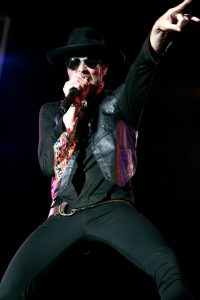
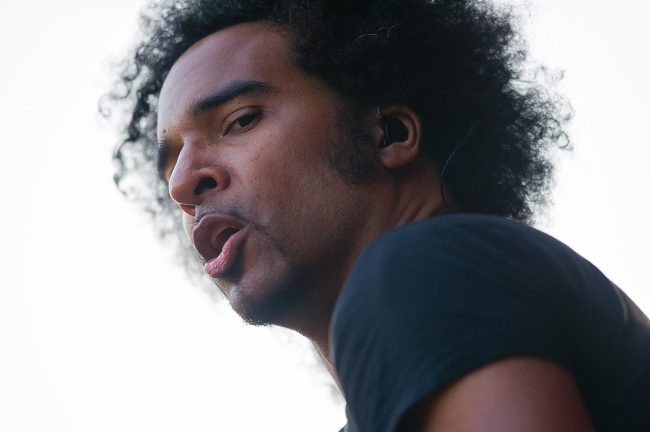
Seeing William DuVall perform is the best way to understand what he brings to the table.
His stage presence combines punk intensity with seasoned rock confidence.
Watch this performance and hear that voice for yourself.
That kind of energy cannot be faked or manufactured.
What Comes Next for William DuVall
The future looks bright for William DuVall and the entire Alice in Chains camp.
The band is reportedly working on new studio material as of 2026.
A new album is widely anticipated later this year.
DuVall continues to collaborate across genres, from thrash metal to acoustic folk.
His production work with younger bands shows a desire to give back to the next generation.
After more than four decades in music, he has nothing left to prove to anyone.
Yet he keeps pushing, keeps creating, and keeps showing up.
For more background on his career, check his Wikipedia page.
From punk basements to platinum records, William DuVall remains one of rock’s most authentic and enduring voices.